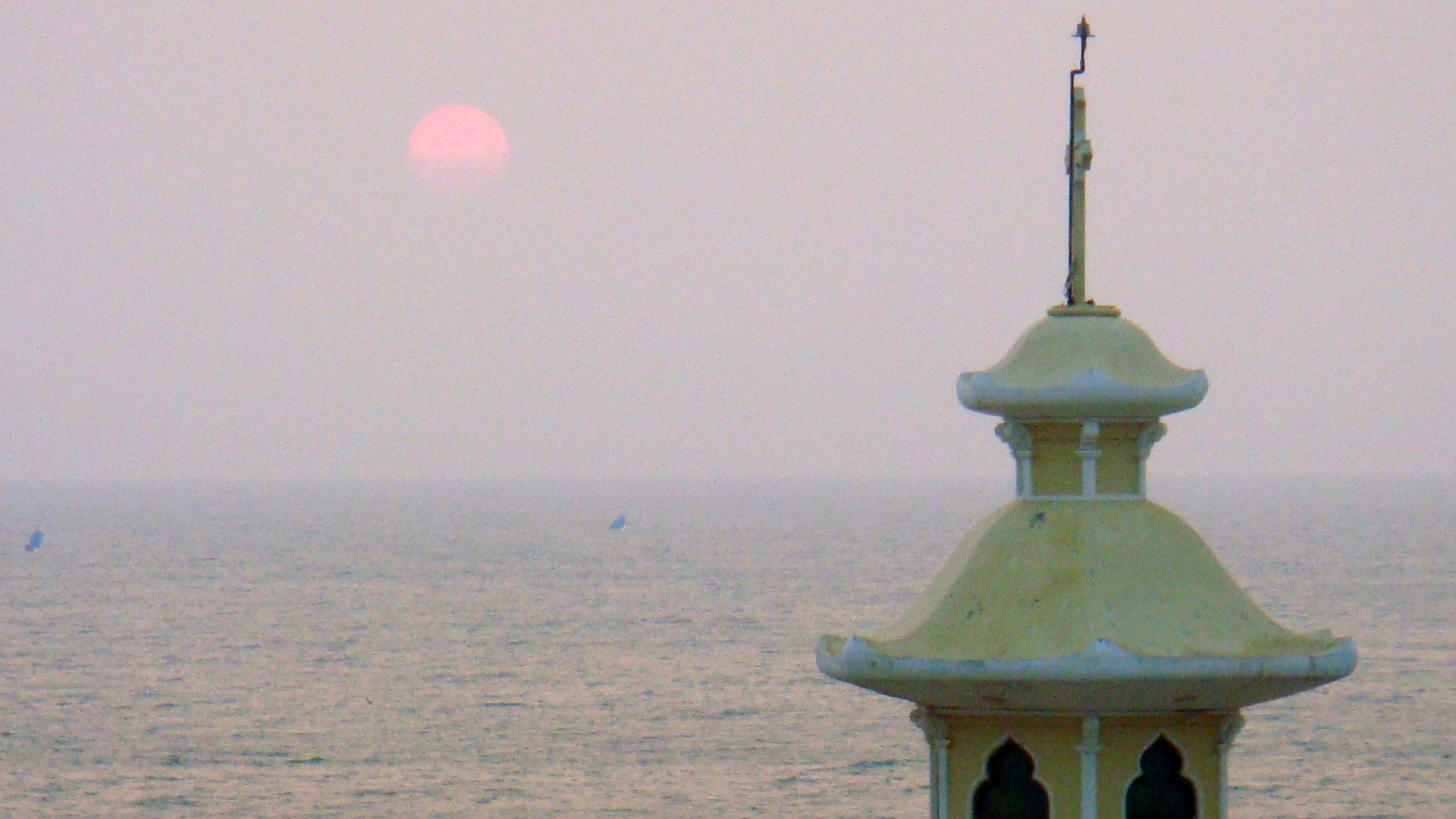
Kanyakumari, the most southerly point of the Indian mainland. We arrived late so we didn’t see much of the town until the morning sunrise. We took this shot from our room:
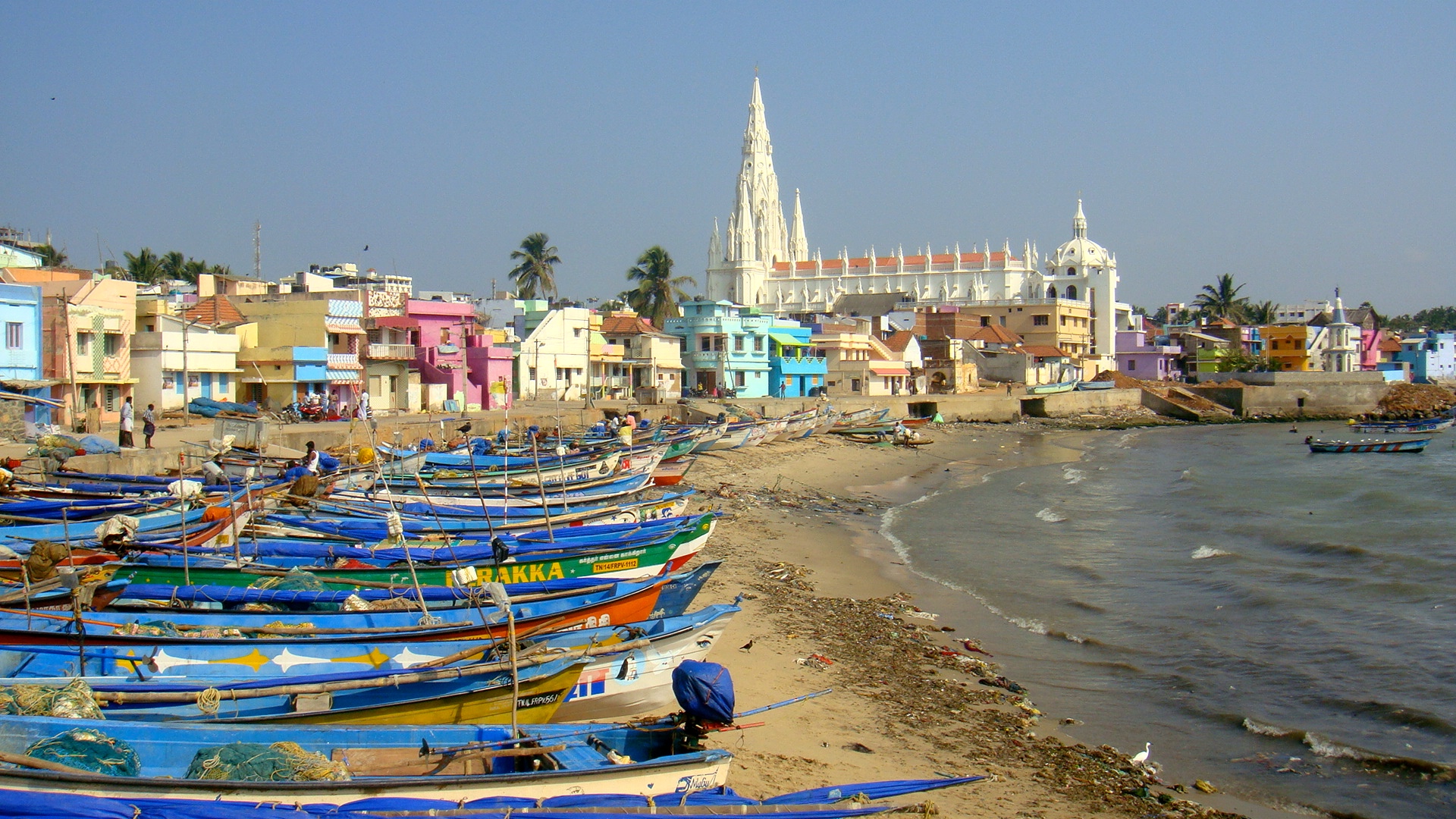
We went out to explore the town and were pleasantly surprised by how pretty it was:
These two islands sit just off the shoreline, the one on the right sports a statue of the poet Thiruvalluvar who was apparently born in Kanyakumari. Surprisingly no-one has any real idea when he was born, dates range from the 1st century BC to the 8th century AD. The statue looks old but was actually opened to the public on January 1st, 2000:

The town is still a working fishing port:

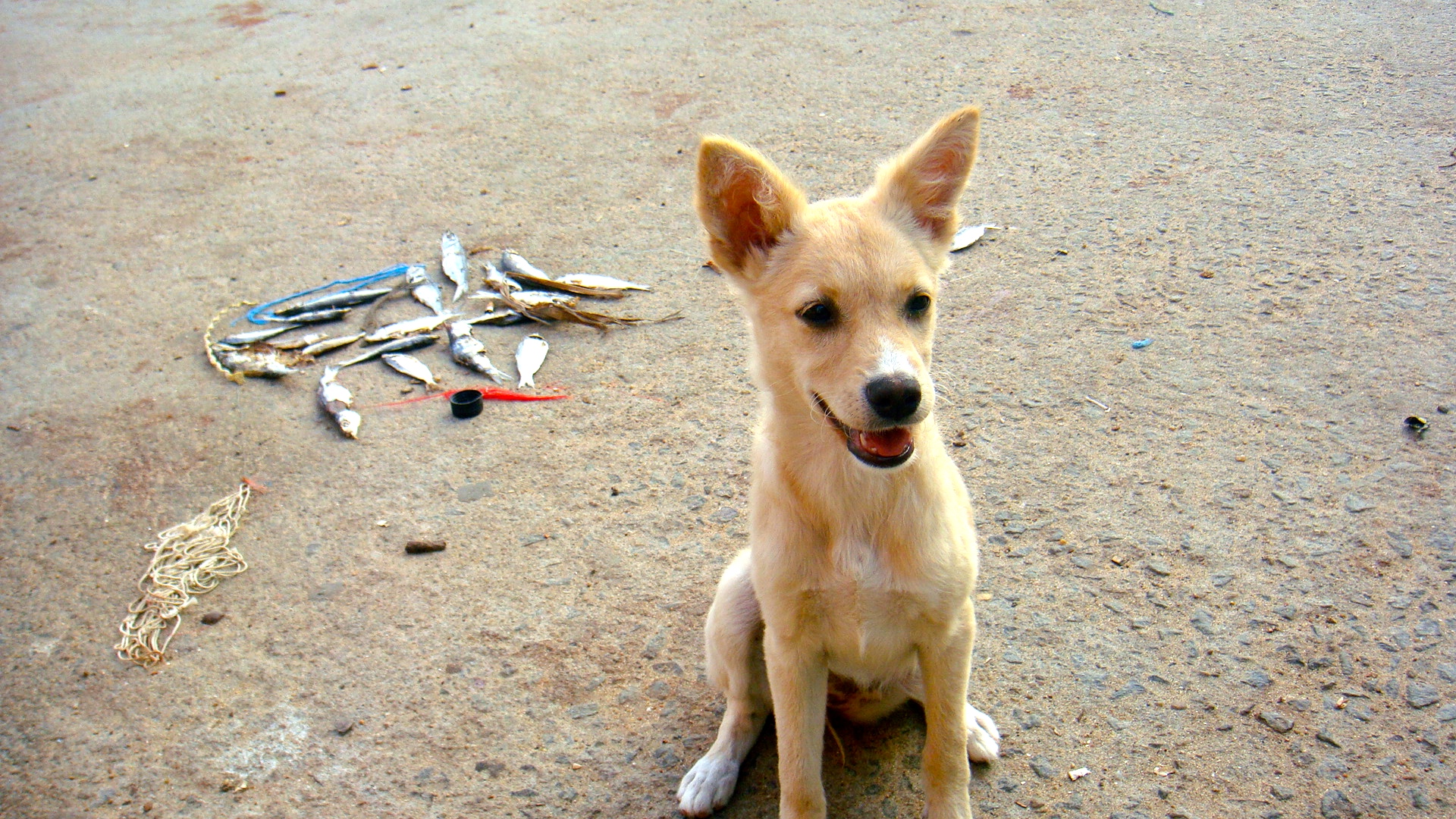
This little dog came running up to us as we were walking along the front, he was a cute little thing desperate for attention:
Several of the houses were really pretty:

as were the local games:
 Sumeet – recognise it?
Except for the game we could easily have been in Cornwall but as we left the coast we were bluntly reminded that we were in India:

The Kanyakumari highlight for us was the temple on the seafront. From the outside it’s a long low building painted with red and white vertical stripes. From the inside it’s a three thousand year old work of art. Beautiful carved stone pillars, fabulous shrines, hundreds of people following their various religious rituals. It was a very calming place. Unfortunately photos were not allowed 😦
Having reached the end of the world we turned north again for Varkala. Along the way (just 13km from Kanyakumari) we stopped at a small town with another splendid temple, the Suchindram temple. This temple had a 40m high entrance way known as a “Gopuram”:

The feel of the temple was just like the one in Kanyakumari, these are living temples full of believers. The last time we saw such constant activity was at the Golden temple in Amritsar. It makes quite a contrast to a visit to an Anglican church!
Next to the temple was a large pool with separate bathing steps for men and women:

The temple attracted lots of people and the people attracted lots of stalls, if you wanted chillies you were in the right place:

After the Suchindram temple we drove on to the Padmanabhapuram Palace near the town of Thuckalay. This palace was built in 1600 and rebuilt in 1750. It is apparently a superb example of traditional Keralan architecture. We just thought it was very welcoming:
 A cluster of rooftops
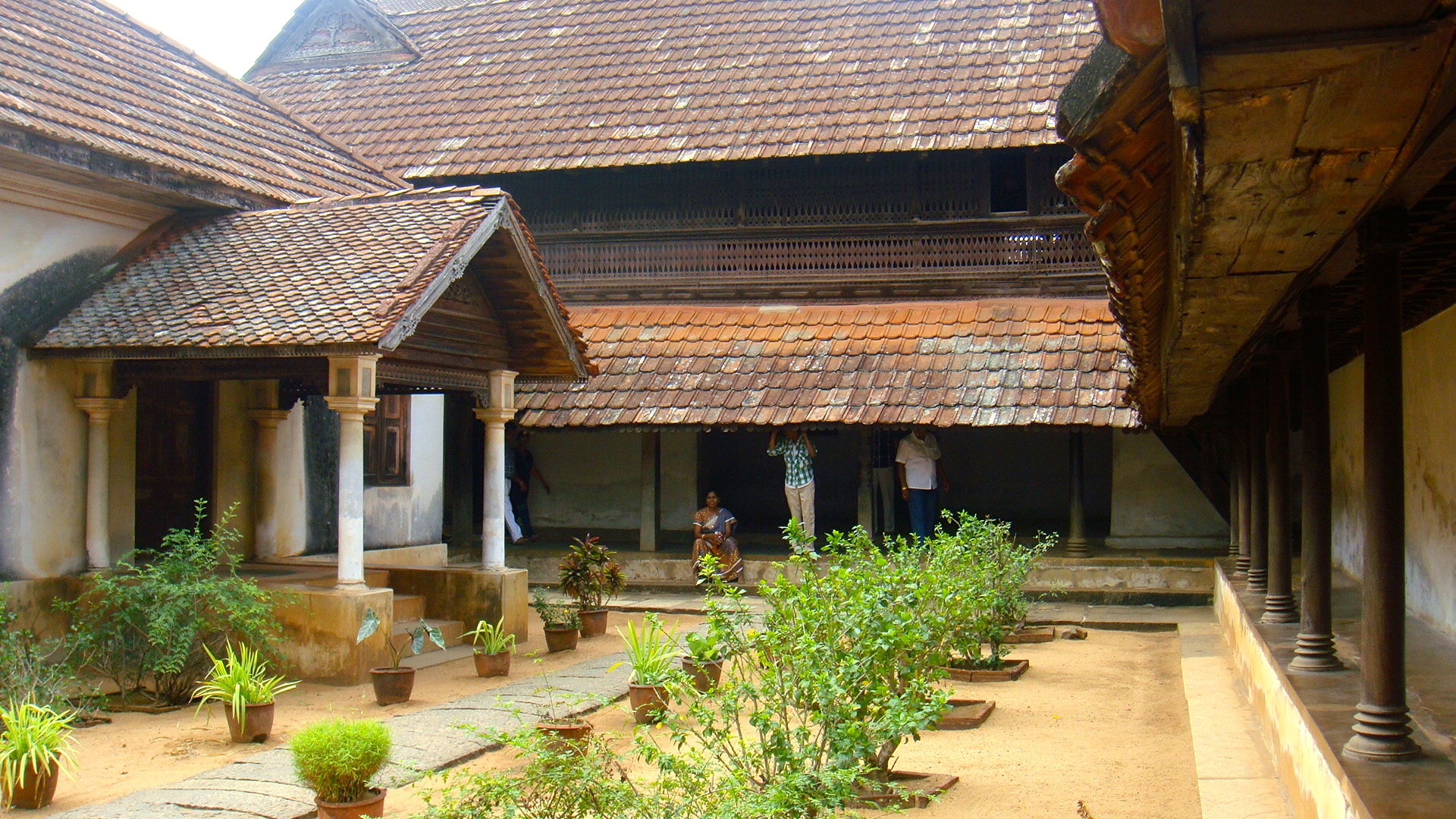 An internal courtyard
 Elephant steps
 The King’s privy
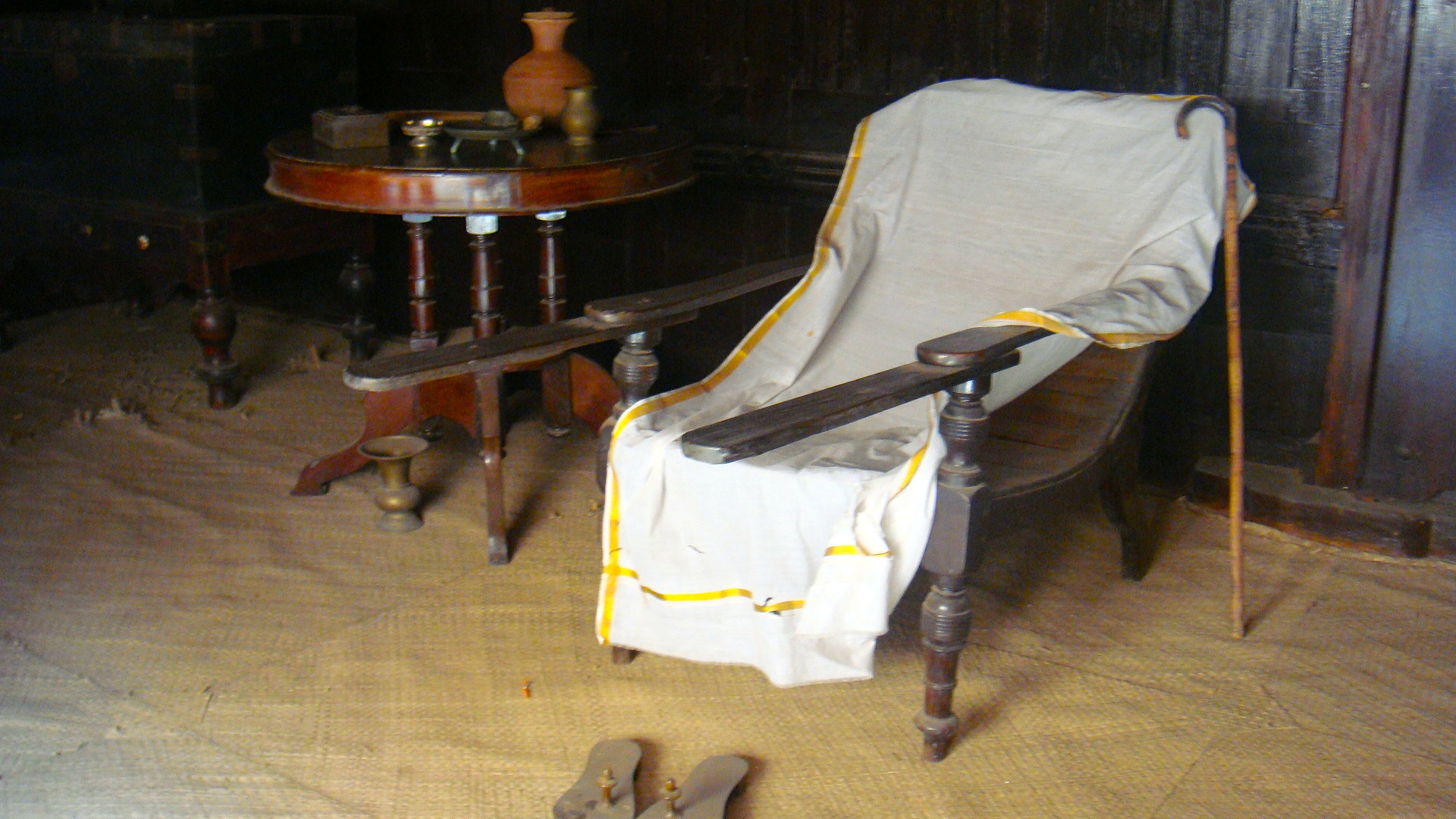 and his reading chair
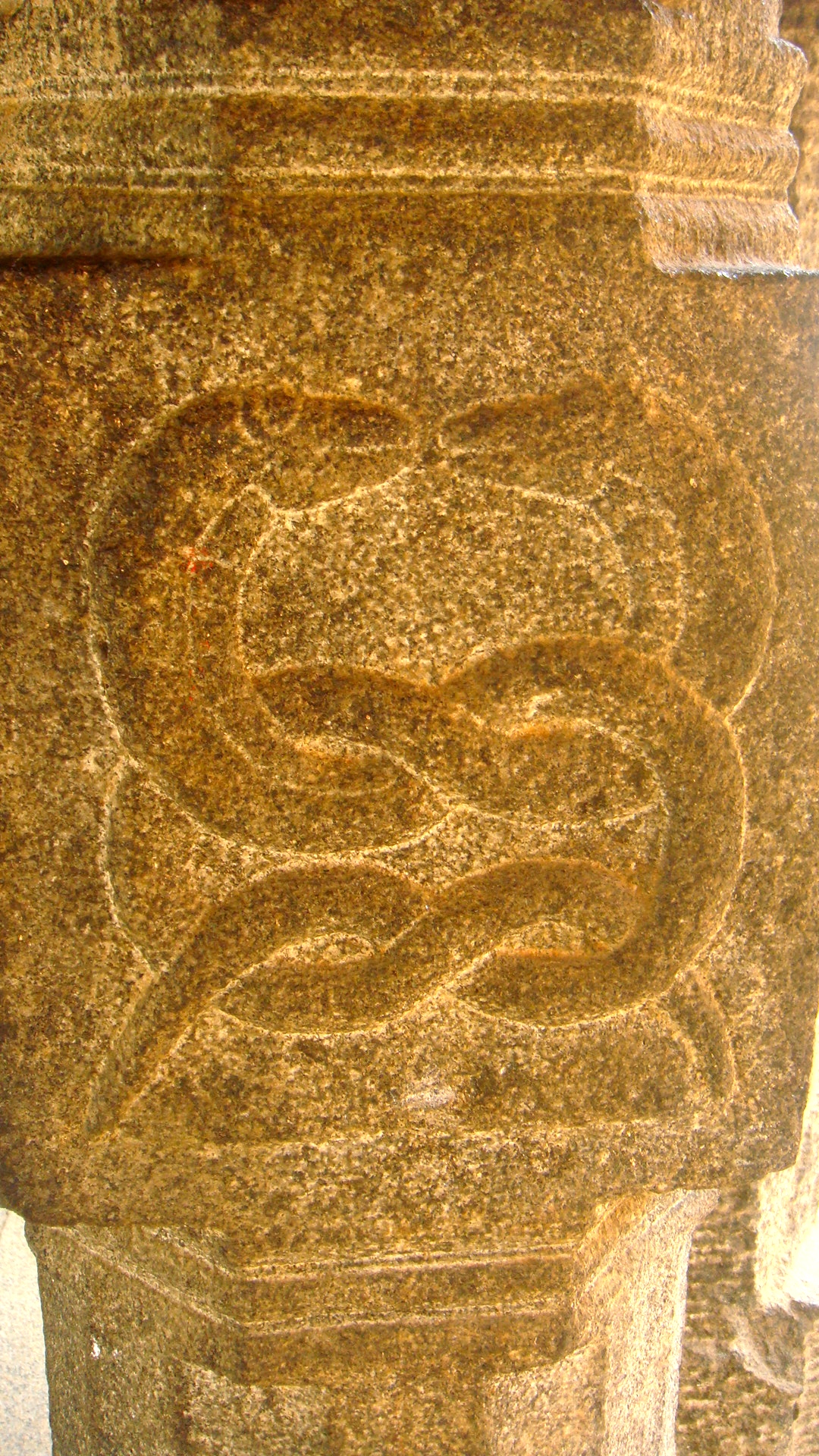 Cobras carved into a stone pillar
 Curved granite slabs
 The kitchen
 The King (found in the garden)
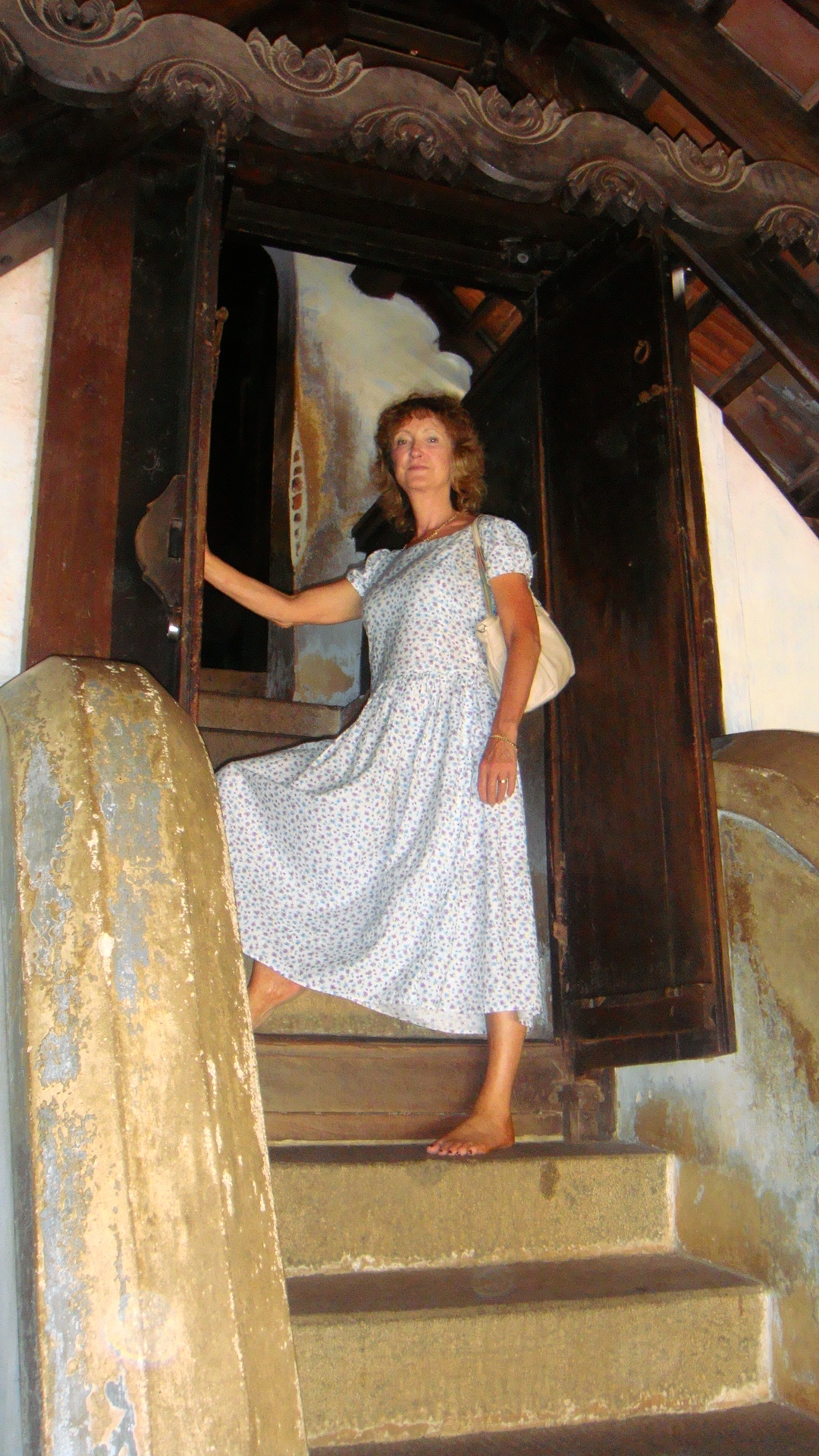 and the Queen!
The palace also housed a museum, there were some really interesting artefacts, this was a suit worn by people who were to receive capital punishment:
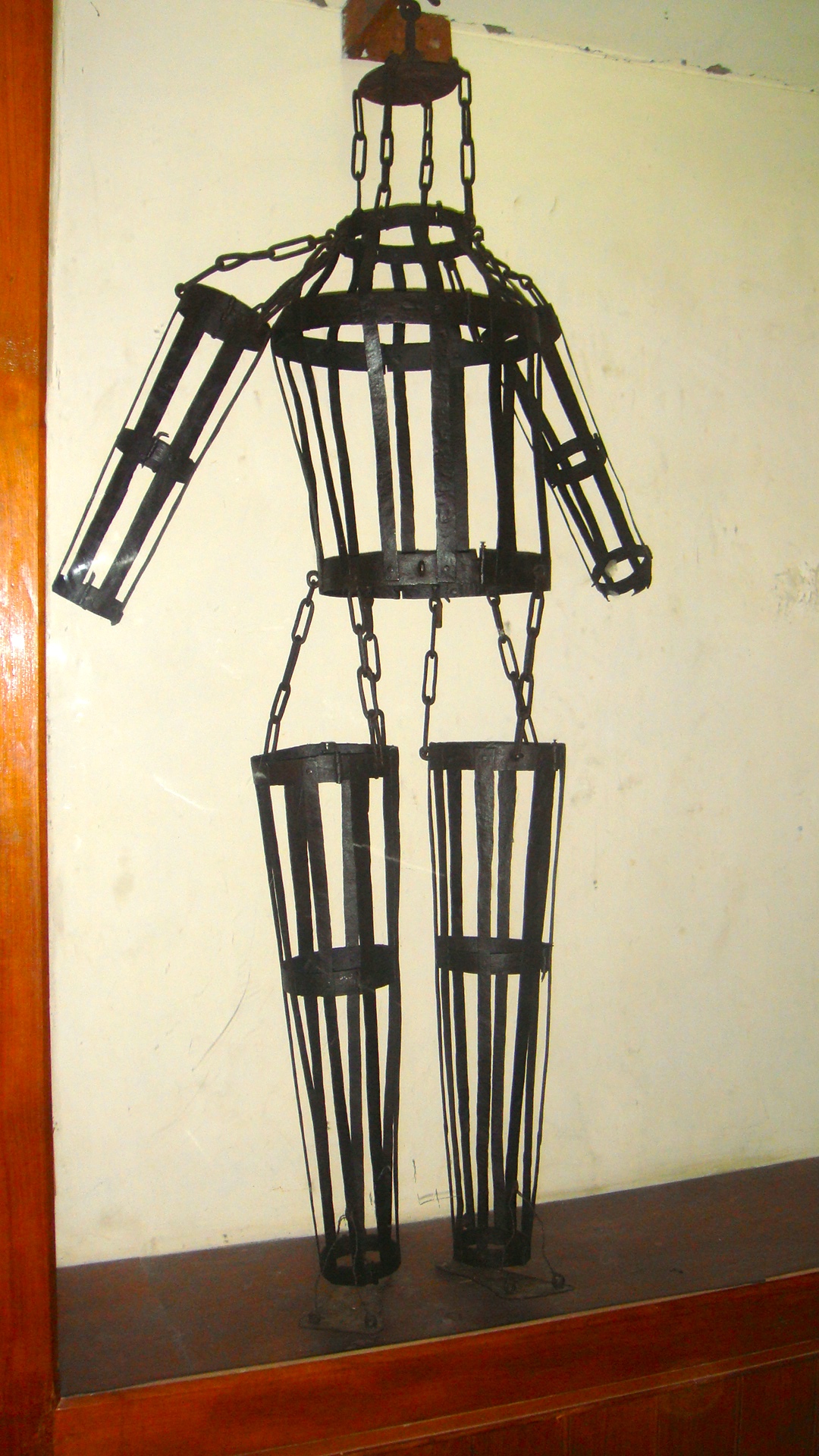
The notes didn’t explain why they had to wear the suit, presumably it was to stop them moving around and spoiling the spectacle.
There were also lots of carved stones each of which proclaimed something, the one below for example recorded the erection of a stone tub for giving drinking water to cows!


Eventually after a solid day of history we reached Varkala, here is the beach by day:

Varkala is big on sun, sea, sand, massages, restaurants, bars, stalls, yoga, and all things ayurvedic. We avoided the yoga and the ayurvedic bits, did the rest, stayed for three very pleasant nights and then left for Allepey – and the houseboats!
 India 2013/14