
Chitradurga just happened to be the town we reached when dusk came. Chitradurga isn’t on the tourist map probably because it isn’t really on the road to anywhere and it doesn’t boast many tourist attractions – except one! But first – the animals of Chitradurga:
 Foxy Oxy
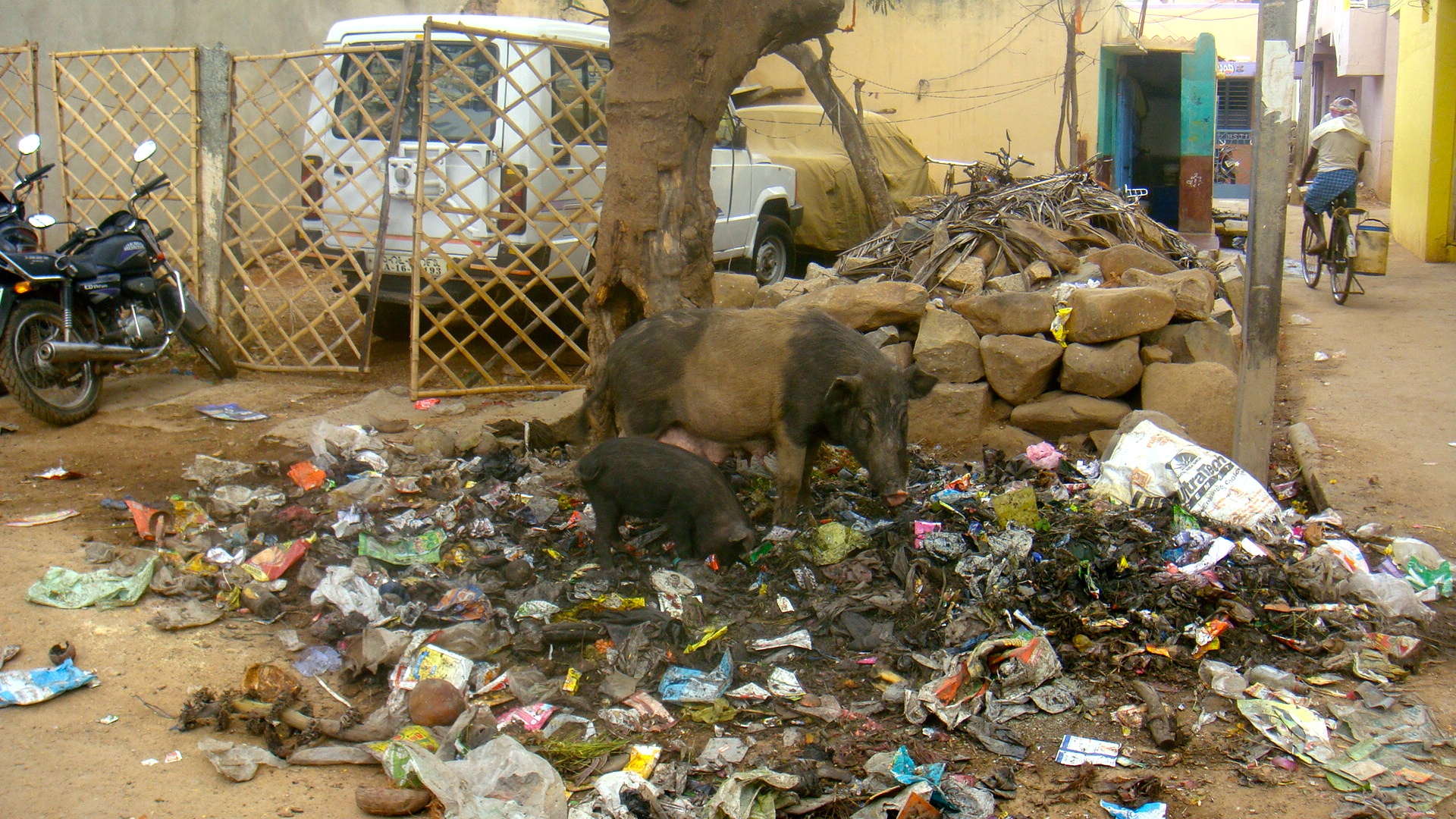 Pigs scouring the rubbish
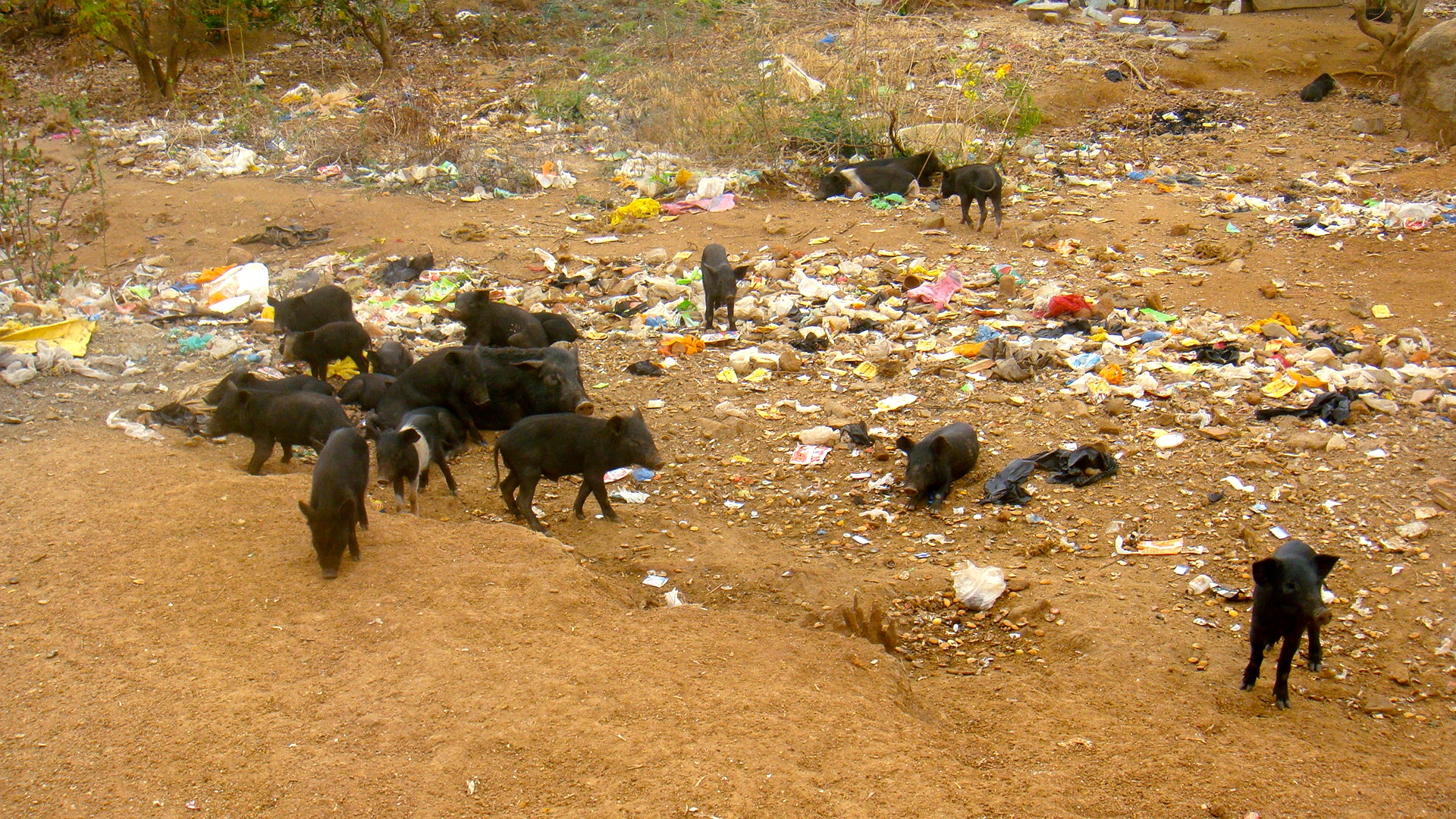 A litter in the litter
 What? Me?
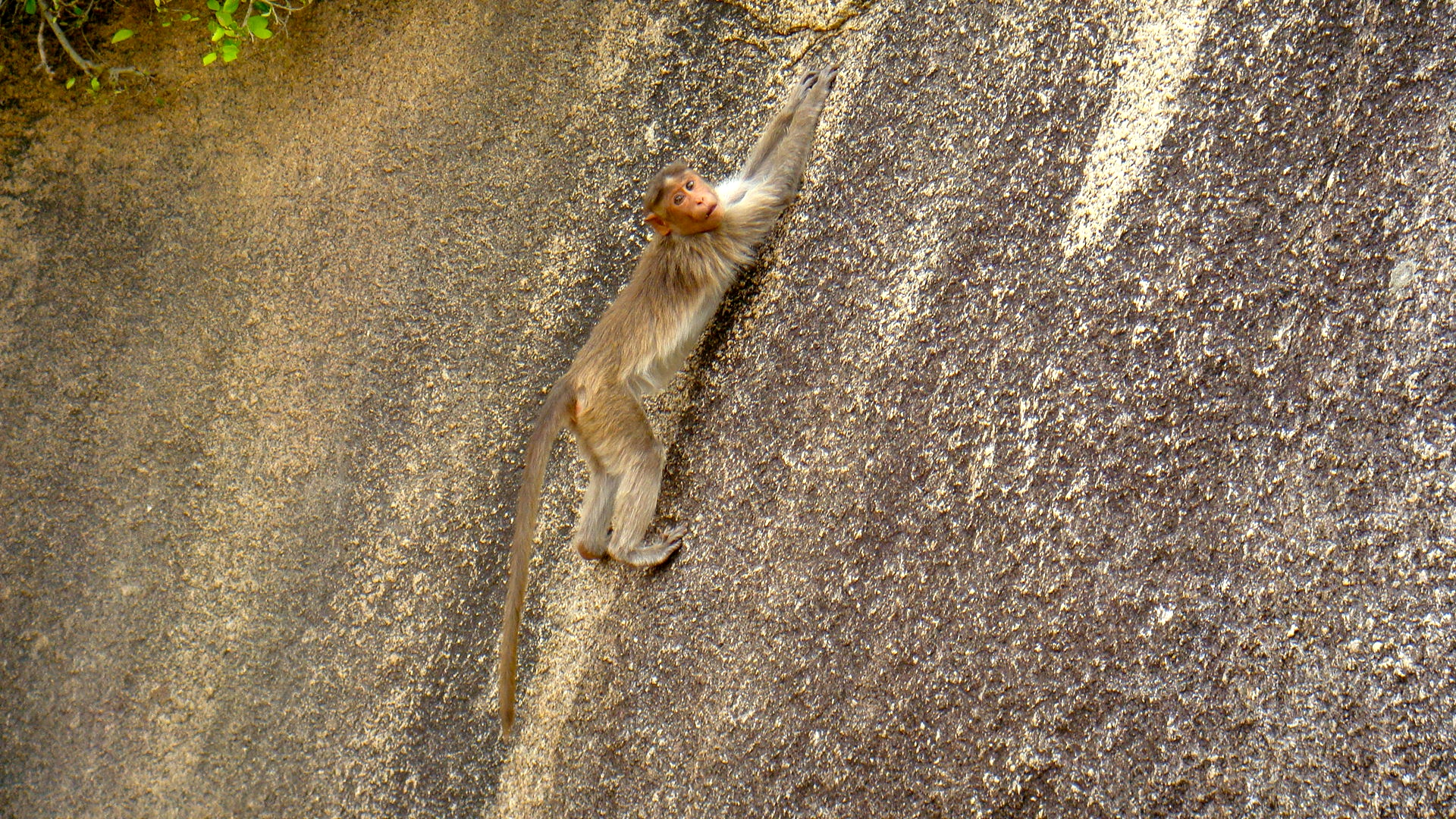
 Monkey
So – the sole tourist attraction … Chitradurga Fort. The area around Chitradurga is dominated by hills which look like piles of giant pebbles. Those pebbles are apparently around 2,500 million years old:
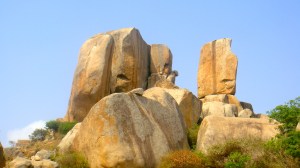
The fort has been built in and around the rocks, in the early 1800’s the British said “Every rock that could be used for offence or defence has been exploited. Every fortification commands others below so that with each formidable fortification gained the enemy is as much exposed to danger as ever”. The fort has seven concentric lines of defence and was considered virtually impregnable. The water supply could last for twelve years without any intervening rainfall so a siege wasn’t an option.
This was just one of the cisterns:

The British eventually gained the fort in 1799 having defeated Tipu Sultan at Srirangapatna just north of Mysore and were “relieved that we did not have to fight for this fort which would have cost us a deal of trouble and some bloodshed”. Tipu Sultan was killed at Srirangapatna and with his death came the end of the Anglo-Mysore wars which had raged intermittently since 1767.
Many of Tipu Sultan’s personal possessions were shipped to England and survive in the Royal collection and at the V&A including this (life sized) little gem, “Tipu’s tiger”:
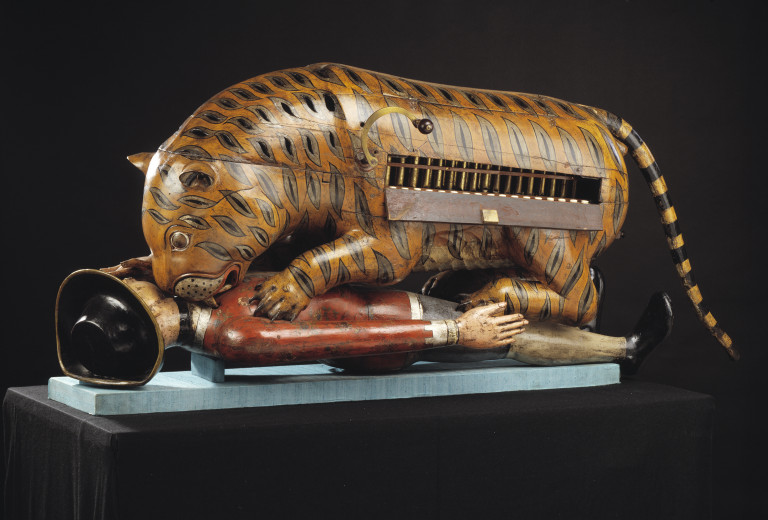 http://www.vam.ac.uk/page/t/tipus-tiger/
 The main gate
Wandering around the fort was illuminating:
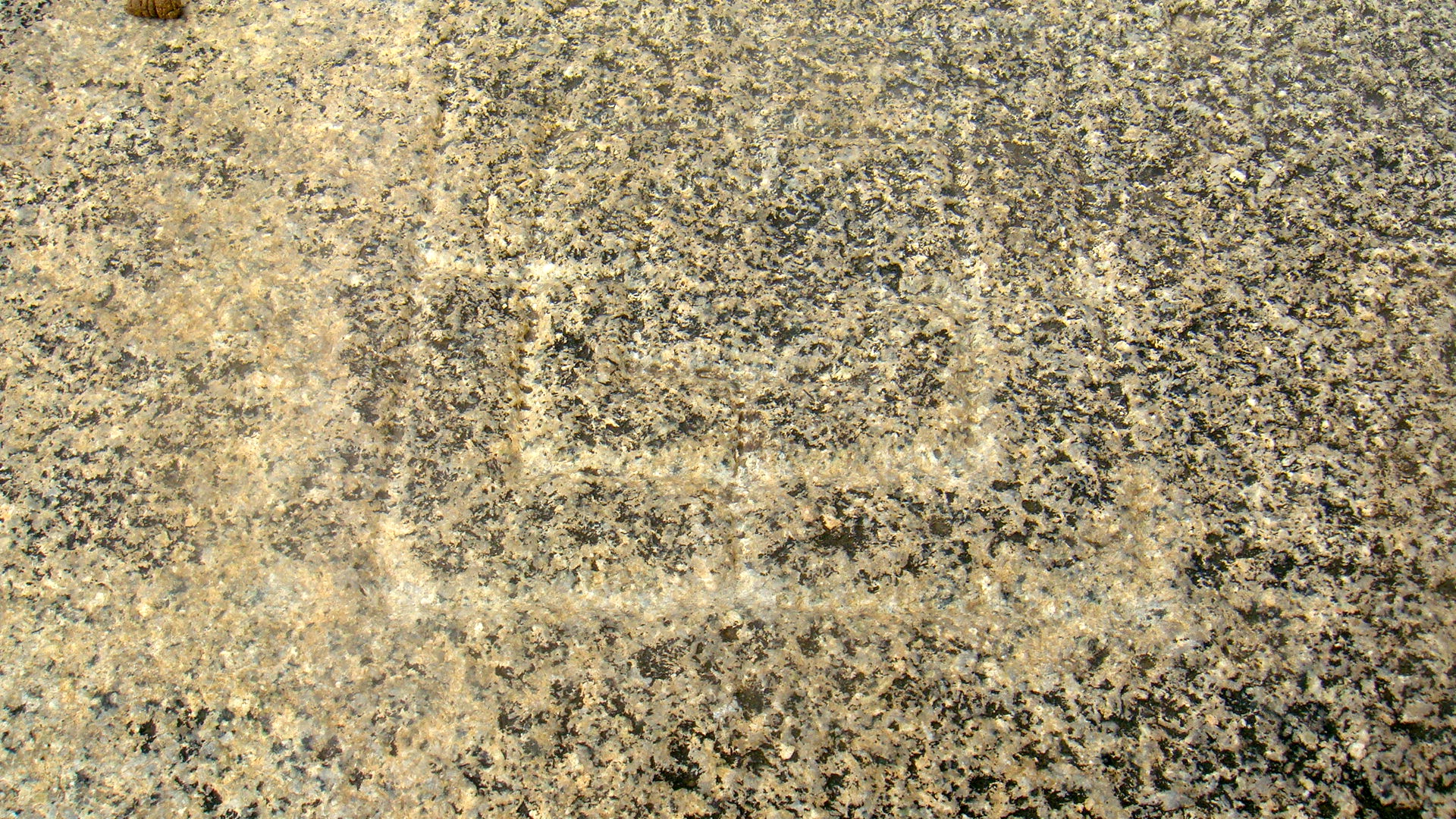 The game Navakankari (Kannada)
I used to play the same game when I was young, we called it Nine Men’s Morris. The game is played around the world and apparently emerged from the Roman Empire. Nevertheless it seemed strange to see it carved on a step here in India!
One rock was carved with the symbol below. It seems that before the current hands together action accompanying the greeting “Namaste” (“I bow to the divine in you.”) Namaste used to be said with the hands closed above the head:
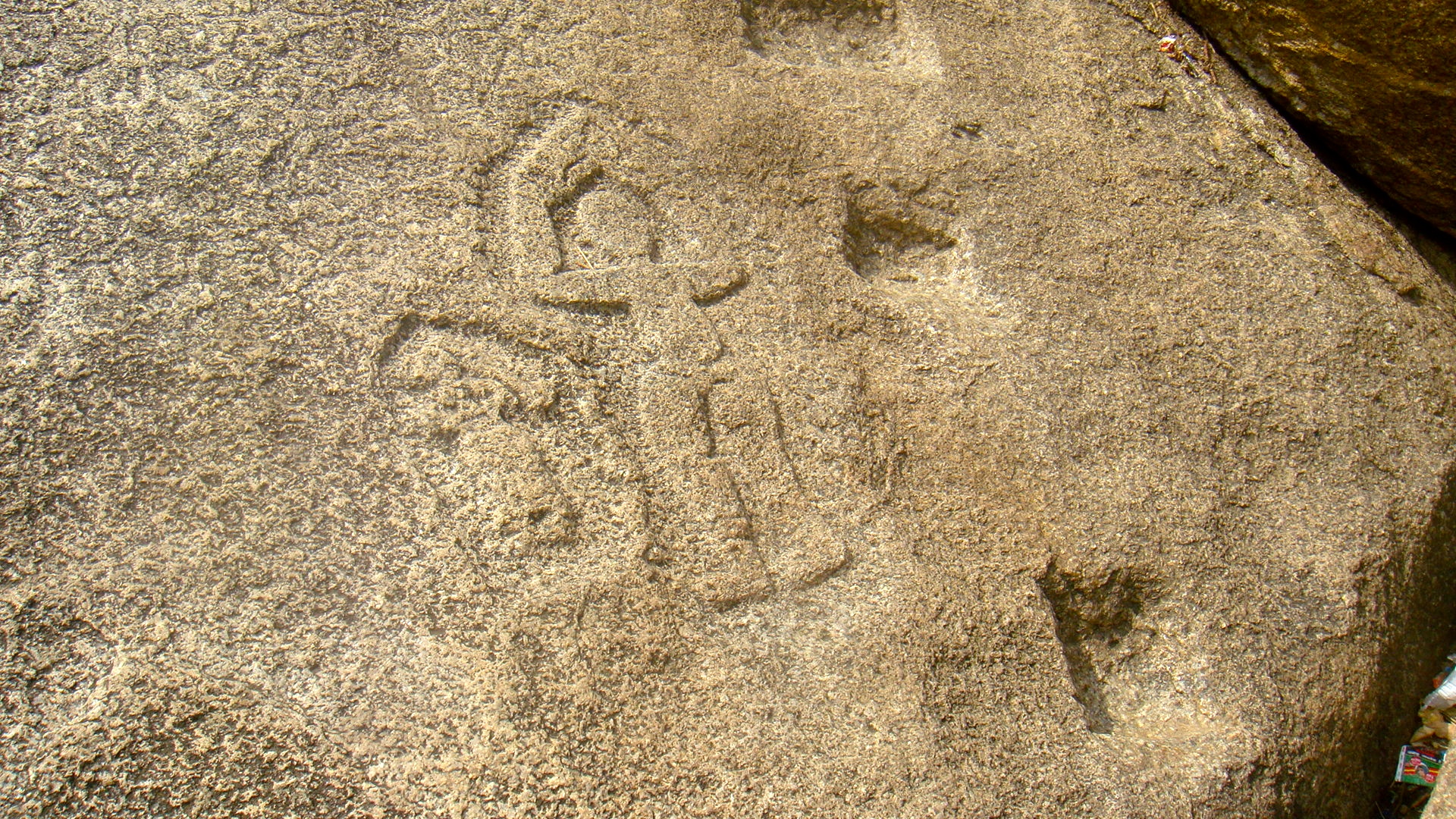 An early form of Namaste.
The symbol above was actually just to the left of a row of footholds cut into a huge rock:
 Footholds running all the way up the rock
You can see here how big the climb is (up to the circular battlement on the hill-top):
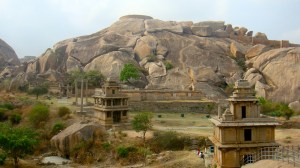 The climb in the background
I didn’t tackle the climb, I was too worried about the damage Leishia would have suffered from laughing at me had I fallen off!
The builders used the resources around them and fashioned stones from the rocks they had to hand. They cut a series of holes into the rock and then forced a wooden peg into each hole. Next they soaked the pegs, this caused the wood to expand and the rock to split! This worked for all sizes of rock, tall pillars were made in the same way. Elephants then moved the cut stones to the building site.
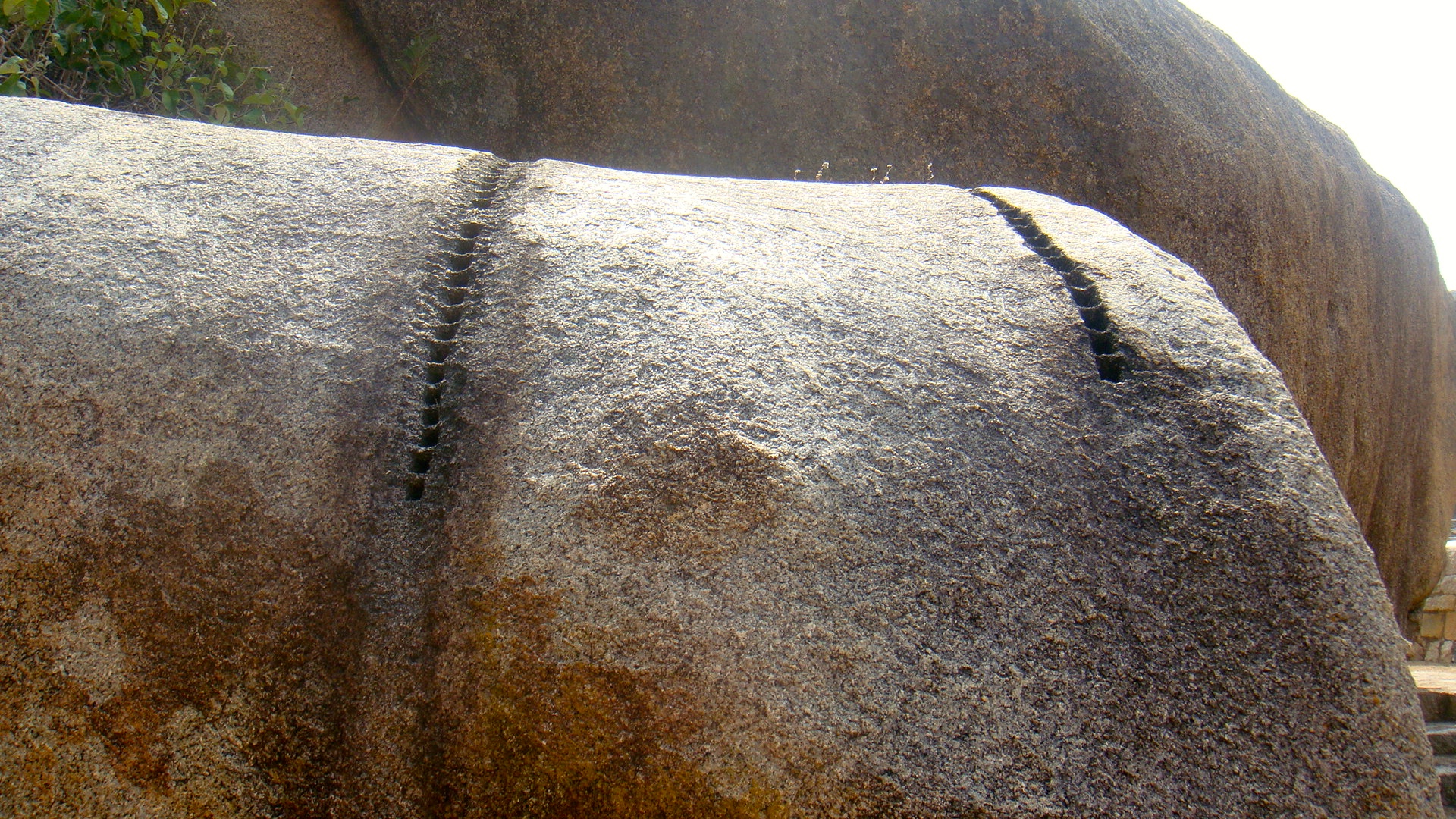 A rock abandoned mid-process.
The fort apparently had many secret entrances/emergency exits. The most famous of them is the “Onake Obavva Kindi”. In the local Kannada language “Onake” means Pestle (a wooden club used for pounding rice grains) and “Kindi” means hole. Obavva was a woman who thwarted the attempts of enemy soldiers to gain access to the fort through the Kindi by killing them with her Onake! Hence the name for the entrance way which would translate as “Pestle Obavva’s Hole”. The story of Onake Obavva has survived the test of time and she now is a symbol of the pride of Kannada women. The local stadium in Chitradurga is the Onake Obavva stadium!
This is me climbing up through the Kindi, luckily Obavva wasn’t around:
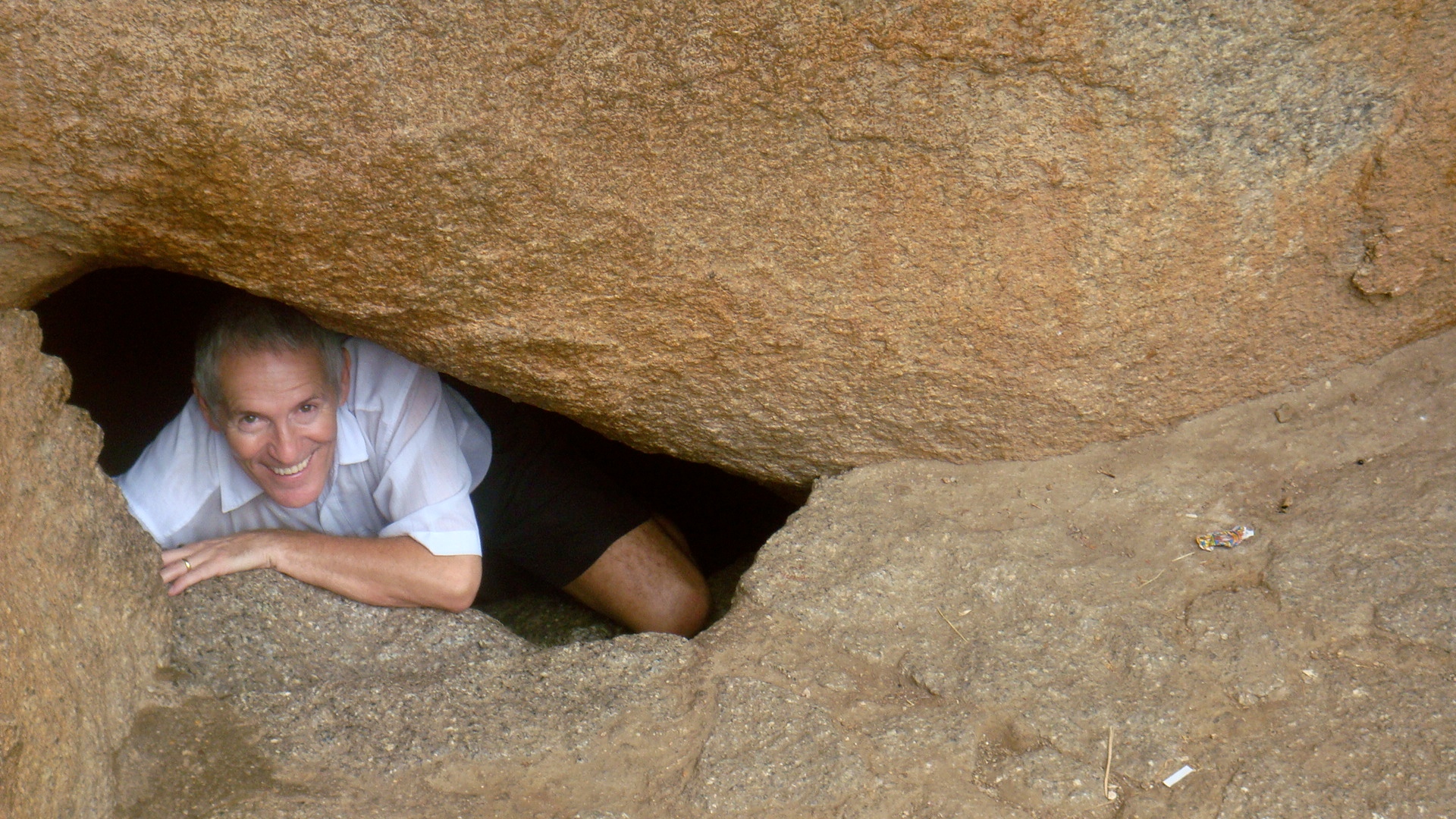 Staged? Surely not?
The fort also contained several temples and shrines:

very tame monkeys:
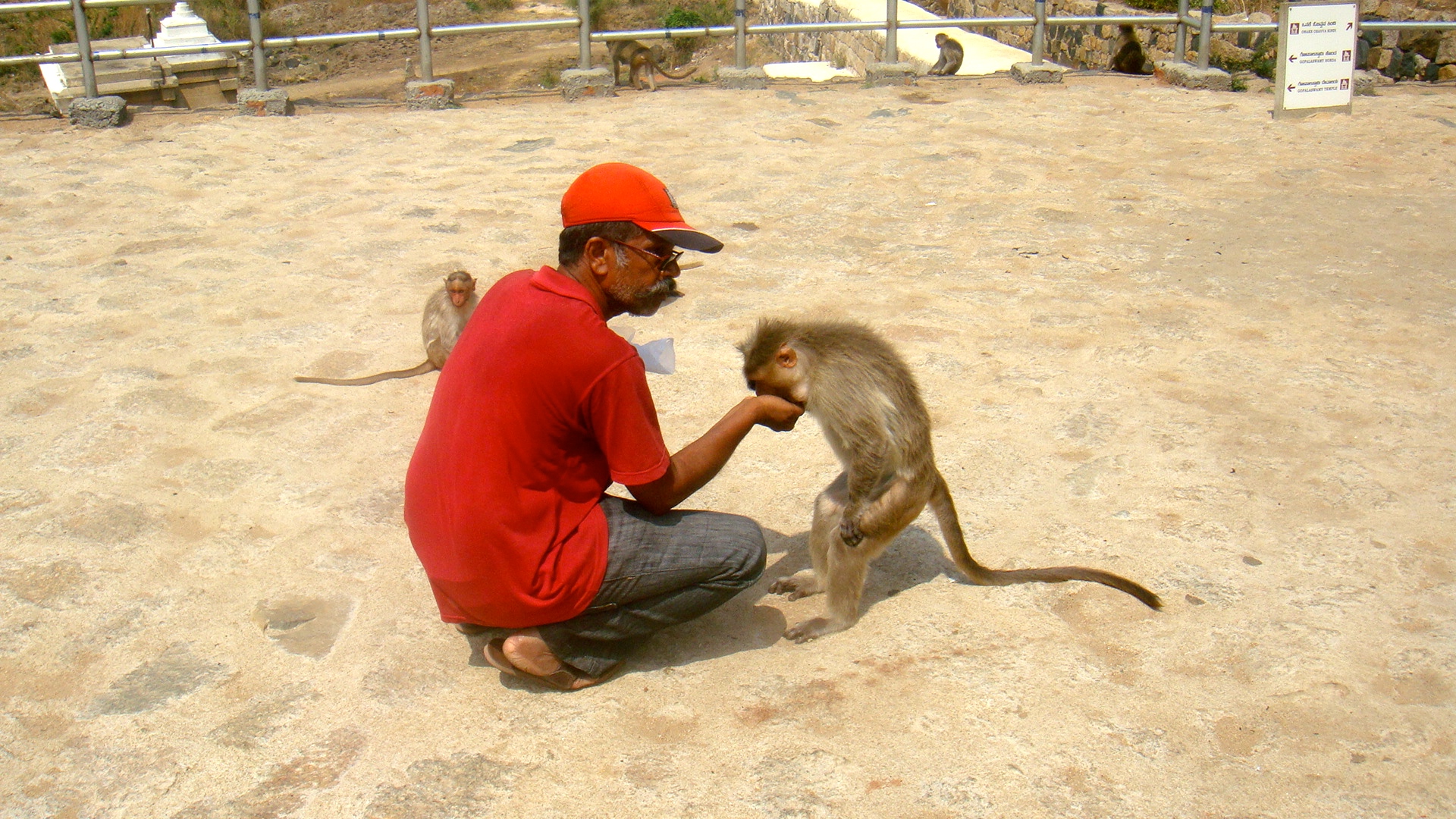
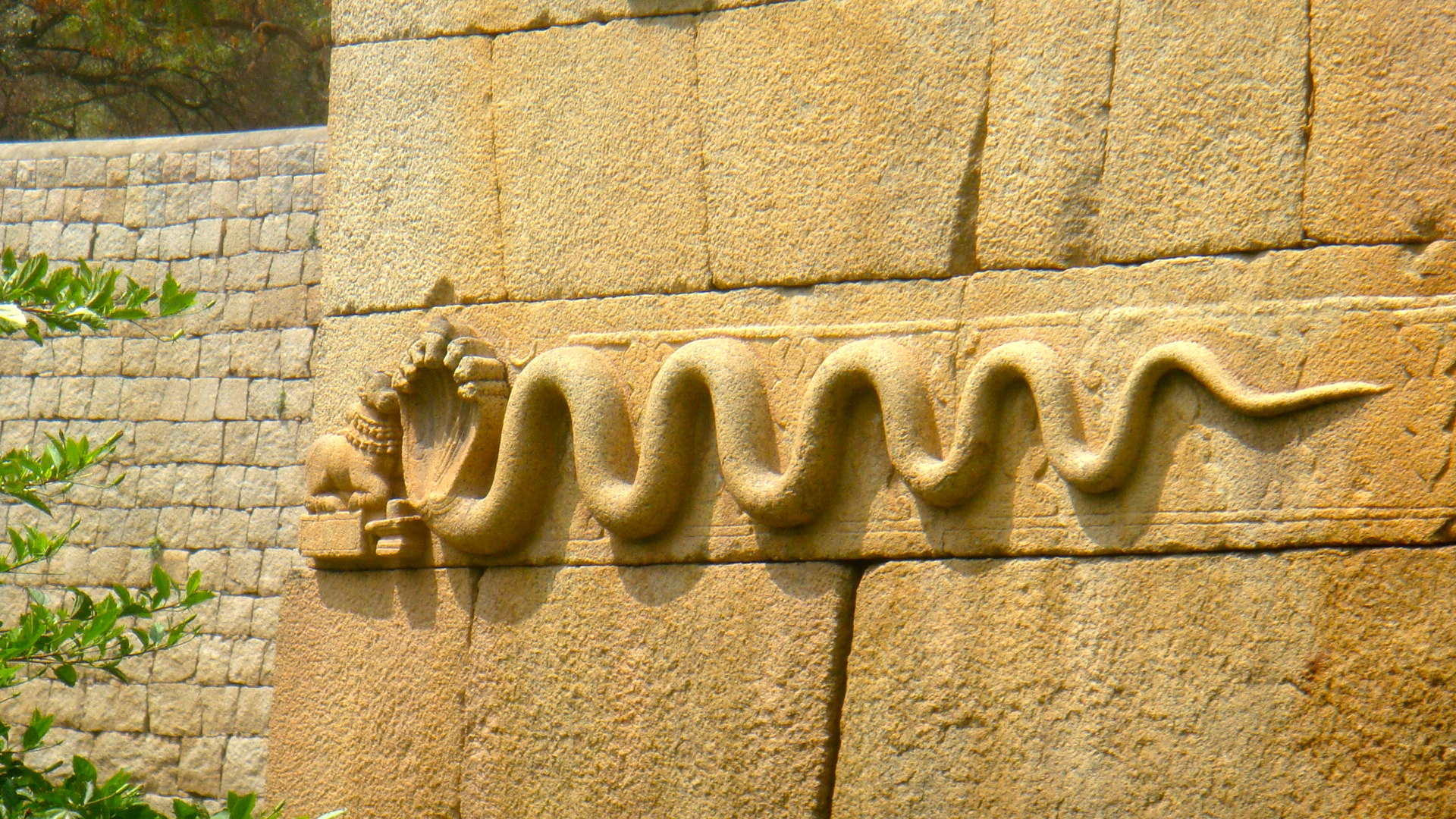
and super carvings:

So quite a fort – and quite a stroke of luck arriving in Chitradurga at dusk.
 India 2013/14