
To the north-east of Mumbai lies Aurangabad. Most people who visit Aurangabad do so to use it as a base for the UNESCO caves at Ajanta (105km) and Ellora (30km). There are also caves on the outskirts of Aurangabad but they are much less frequented. We decided to visit all three sites and also Aurangabad’s own Taj Mahal the Bibi Ka Maqbara.
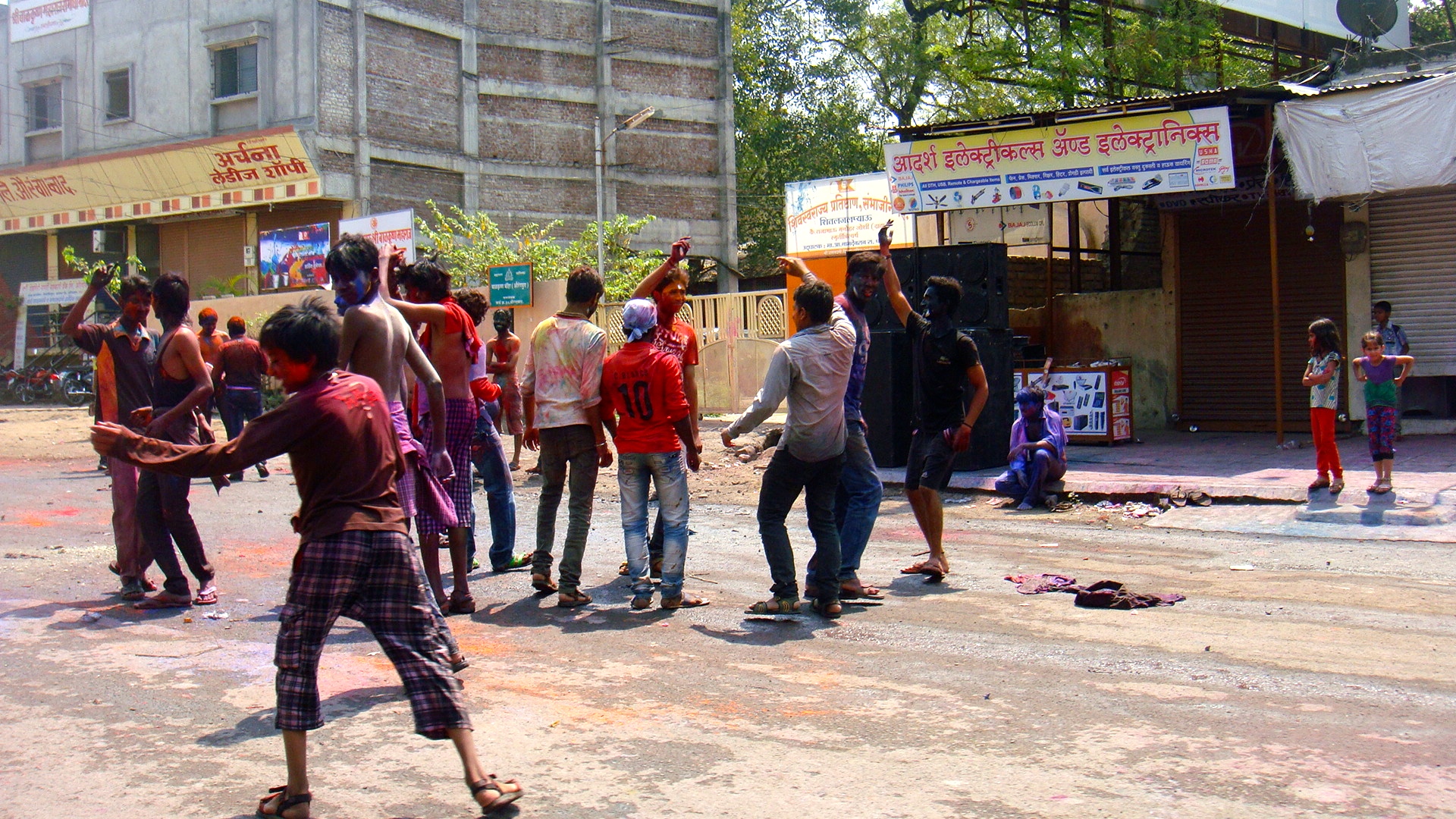
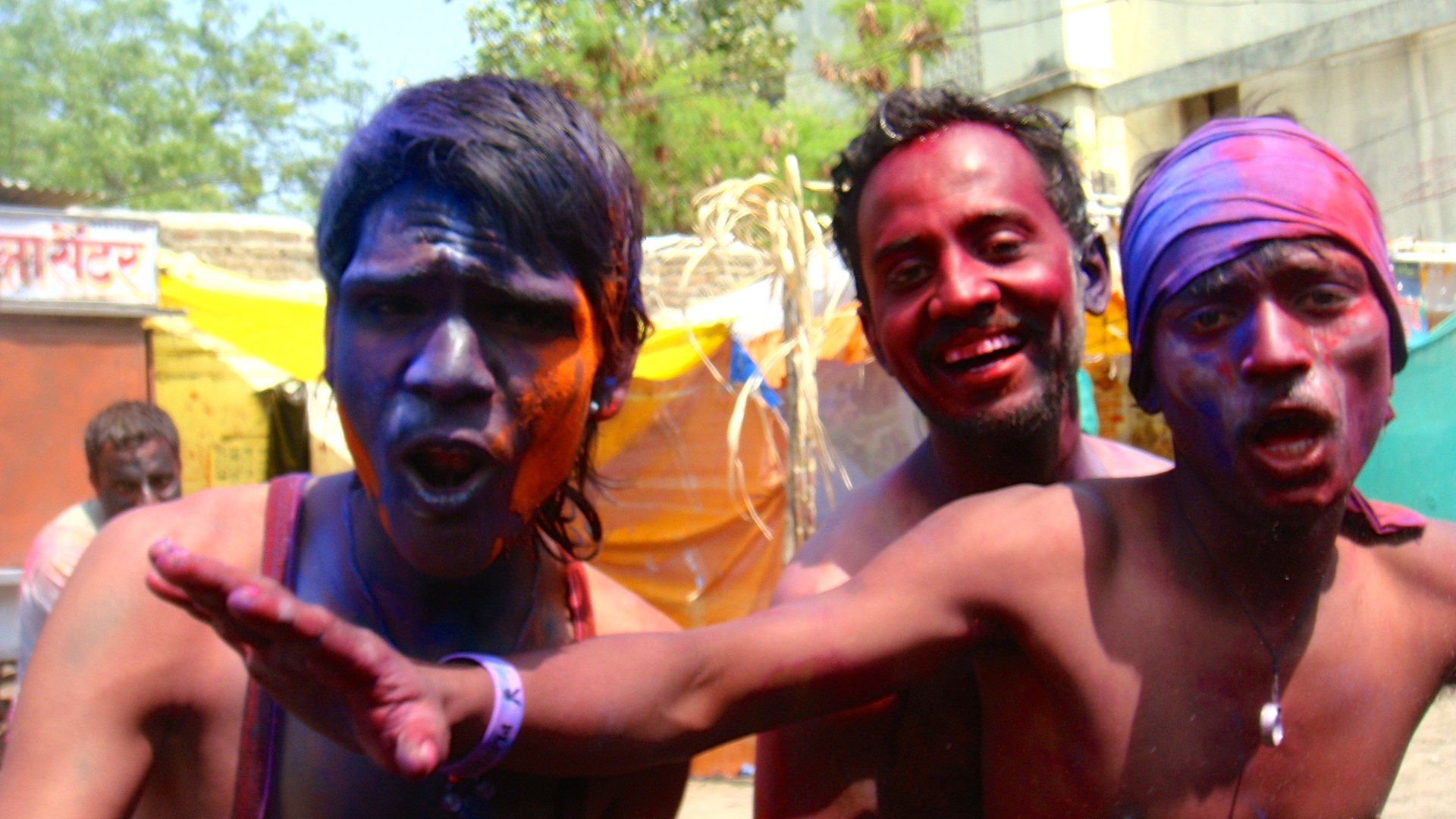
As luck would have it we were in Aurangabad for the Holi festival – the festival of colours. The festival marks the victory of good over evil and the arrival of Spring. It mostly consists of groups of friends getting together and throwing coloured powder around then following that up with liberal doses of water:
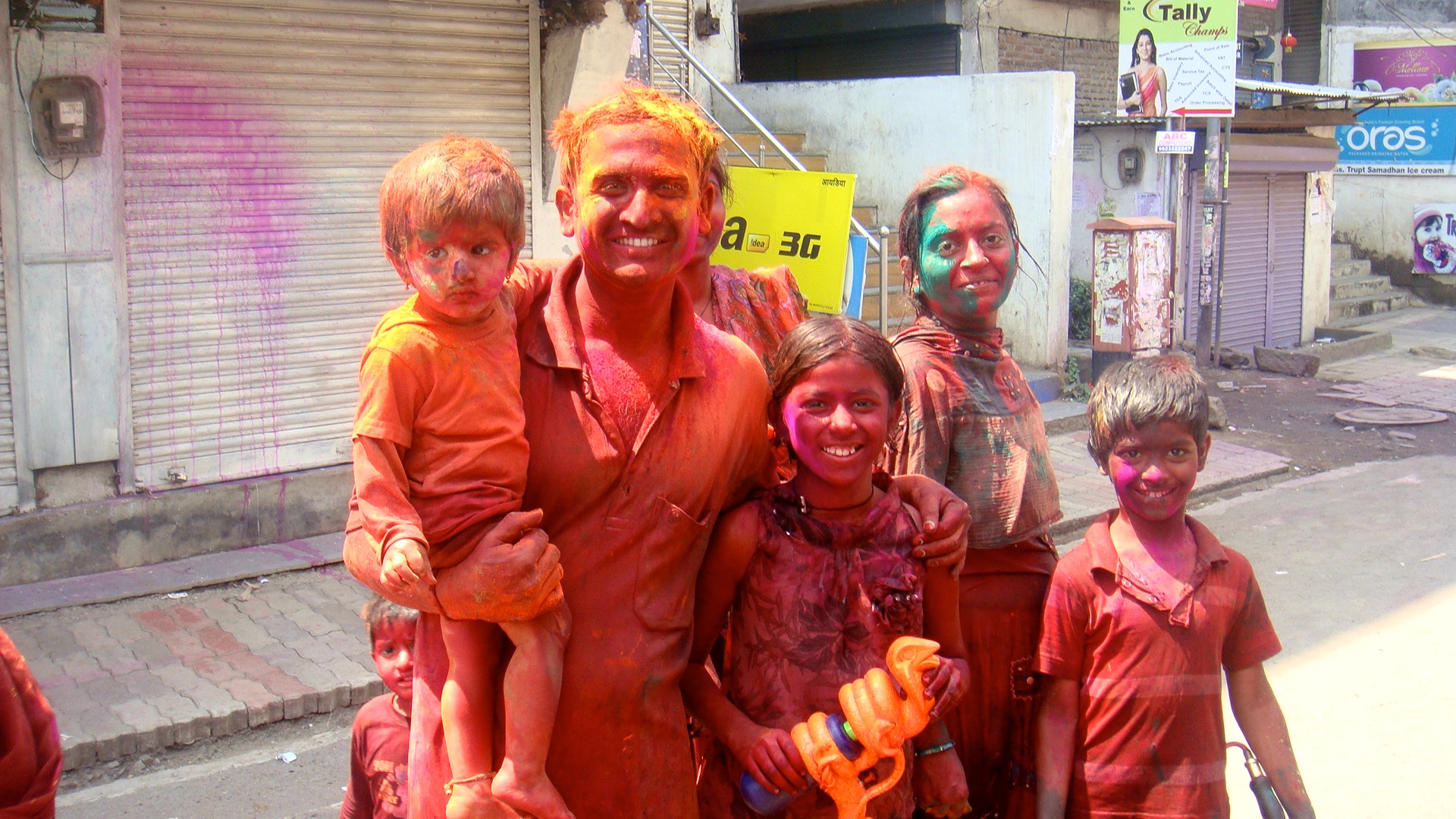
Families get in on the act too:
Then everyone gets on their bikes and heads off to the next gathering:

We didn’t escape unscathed:
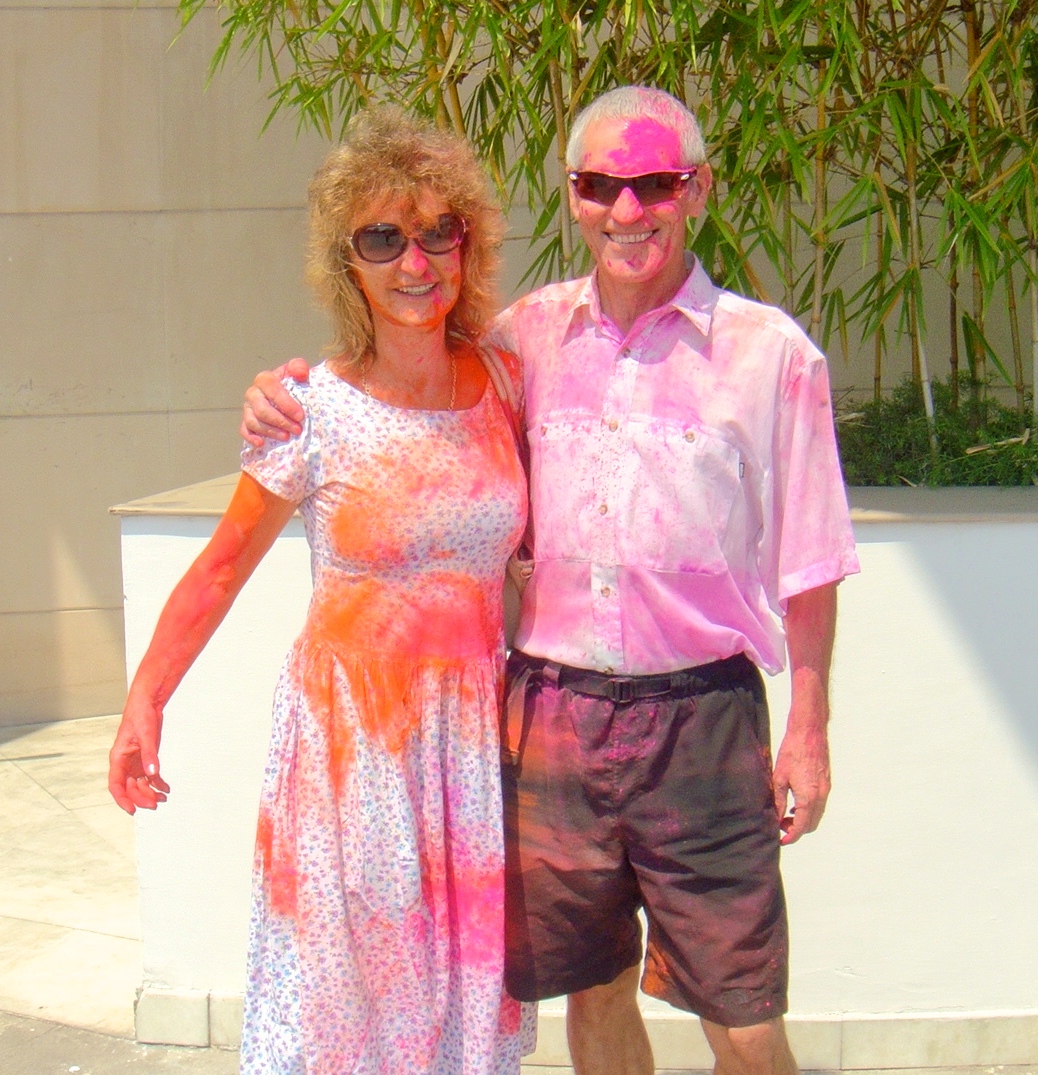 but it was fun!
Anyway – the caves. The reality is that the caves are not caves at all, they were all cut from solid cliffs at various times from 2,000BC to around 1,500AD.
Our first visit was to Ajanta, Ajanta has thirty caves set around the outside of a horseshoe bend of a beautiful valley. It seems the adage “Location, location, location” applied two thousand years ago:
 Viewpoint high above the caves.
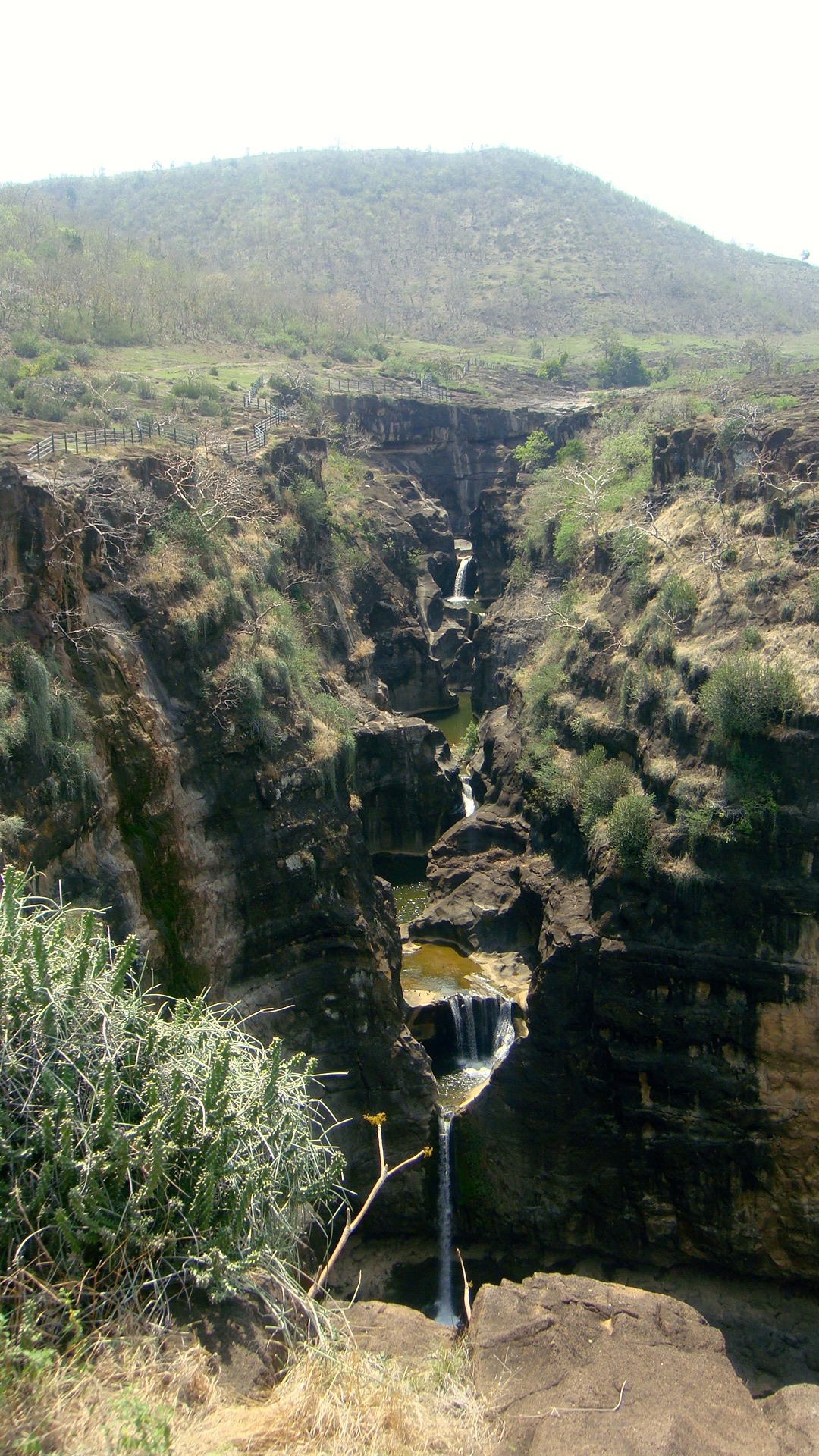
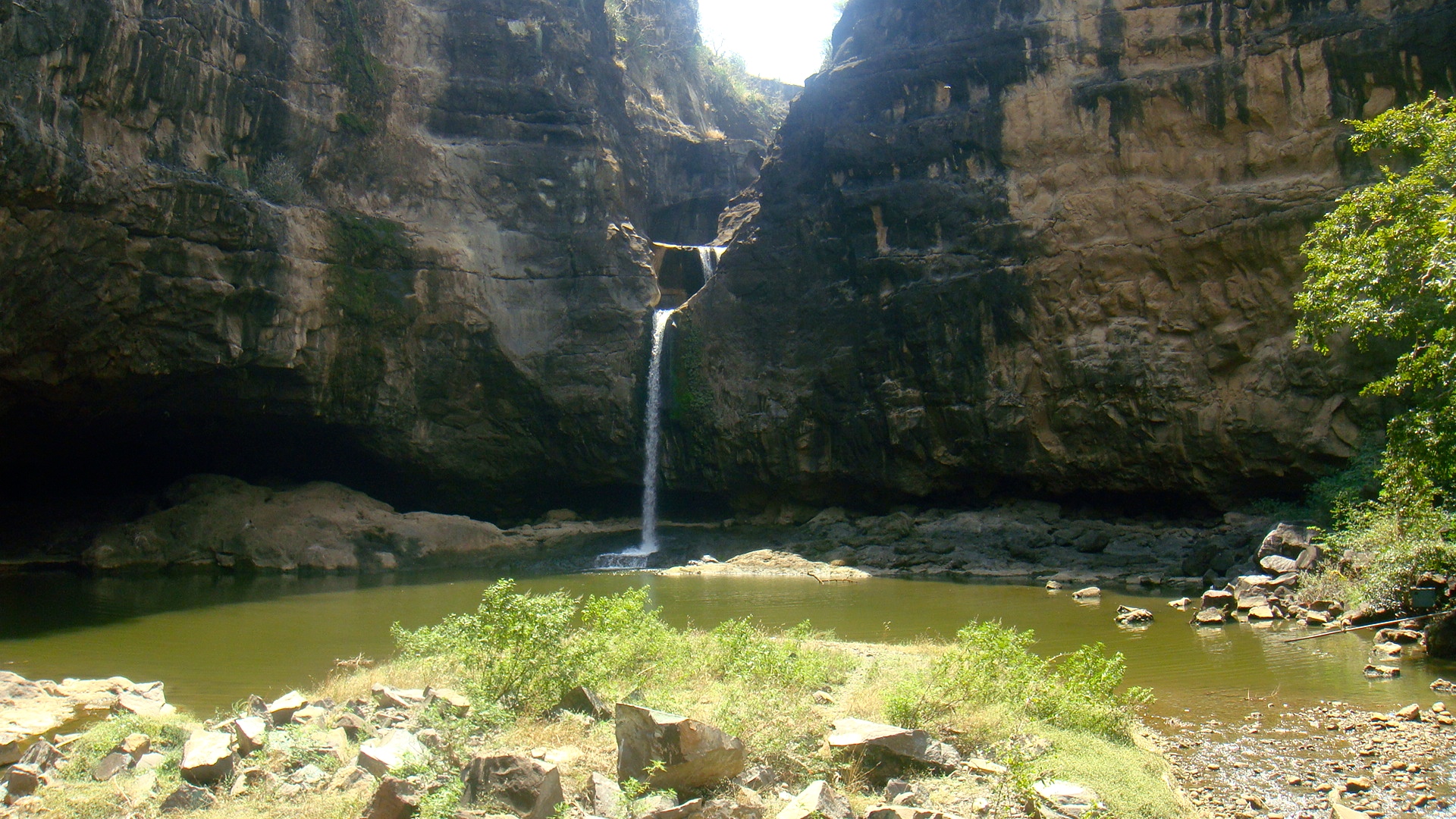
The Waghora stream in the valley is fed from a seven drop waterfall just upstream:
 The caves
The Ajanta caves were excavated in two distinct phases, six around 1,500BC and the remaining twenty four in a burst of activity from 450AD to 550AD. The caves were used by Buddhist monks for their annual retreat during the rainy season.
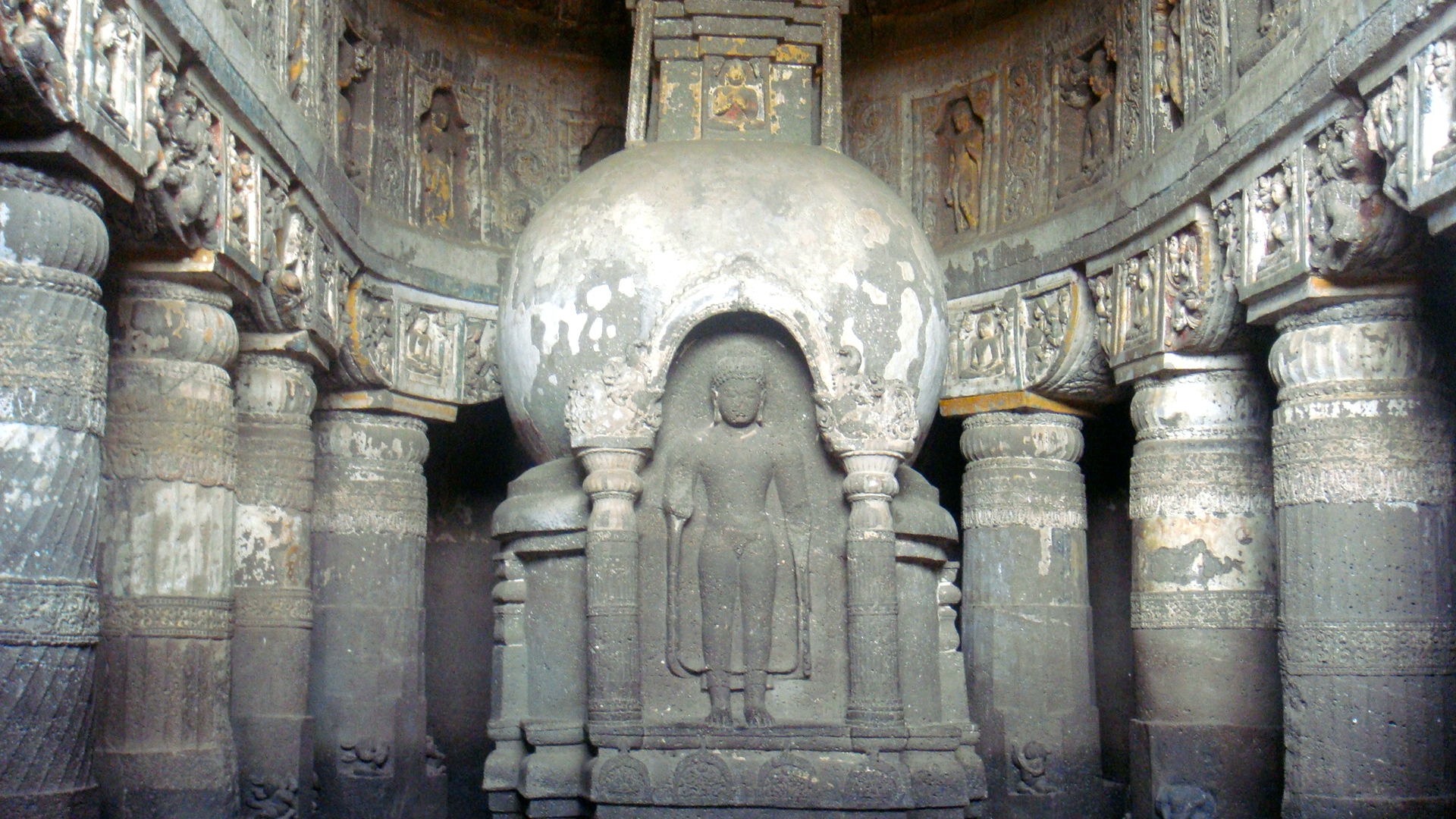
The caves were cut from the ceiling down to the floor and carved and dressed as the excavation progressed, everything is cut from the solid rock and sculpted in situ:
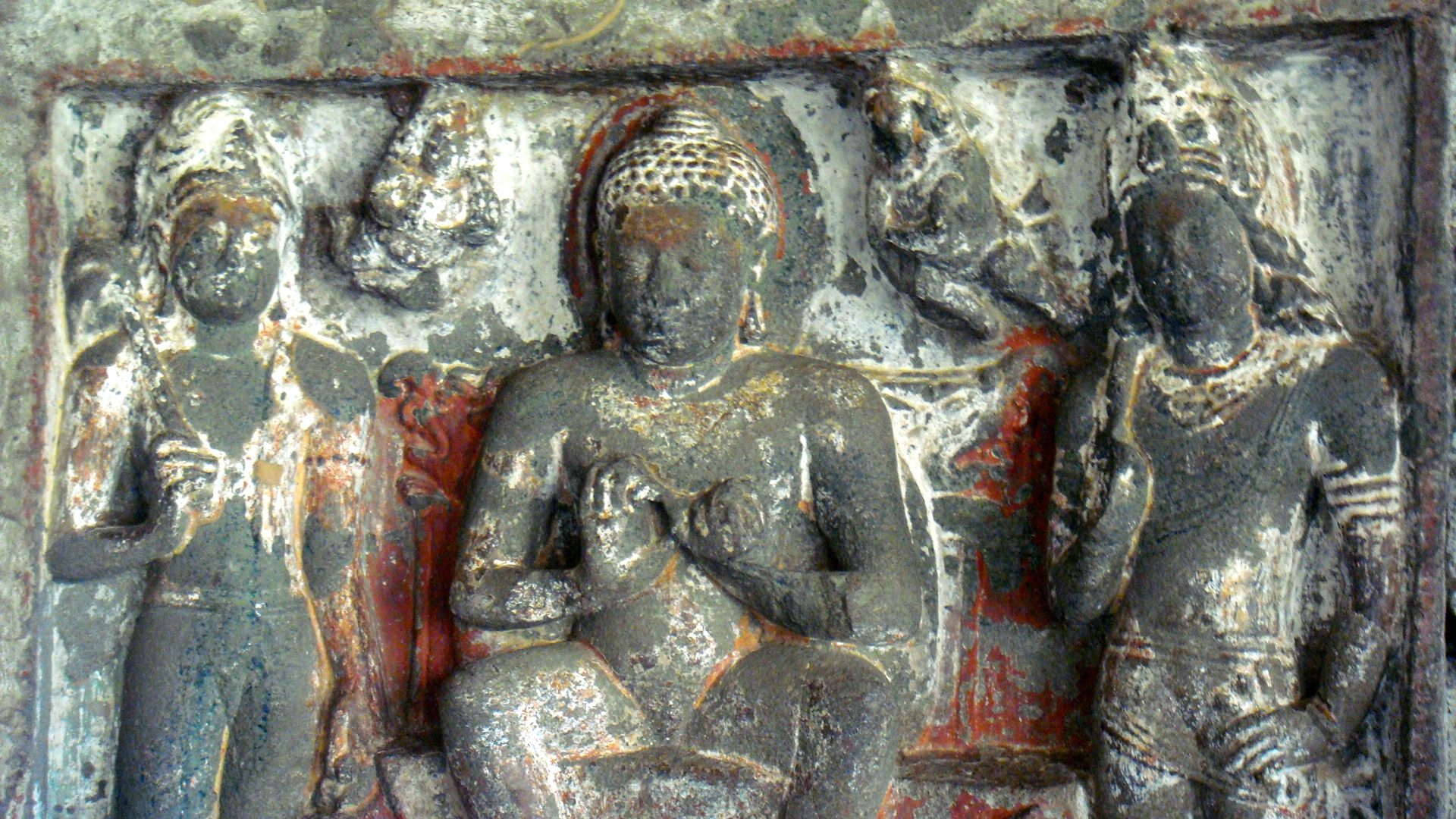
Ajanta is most famed for it’s paintings, difficult to get good shots because flash photography is not permitted but these shots give some idea of the quality of the work:
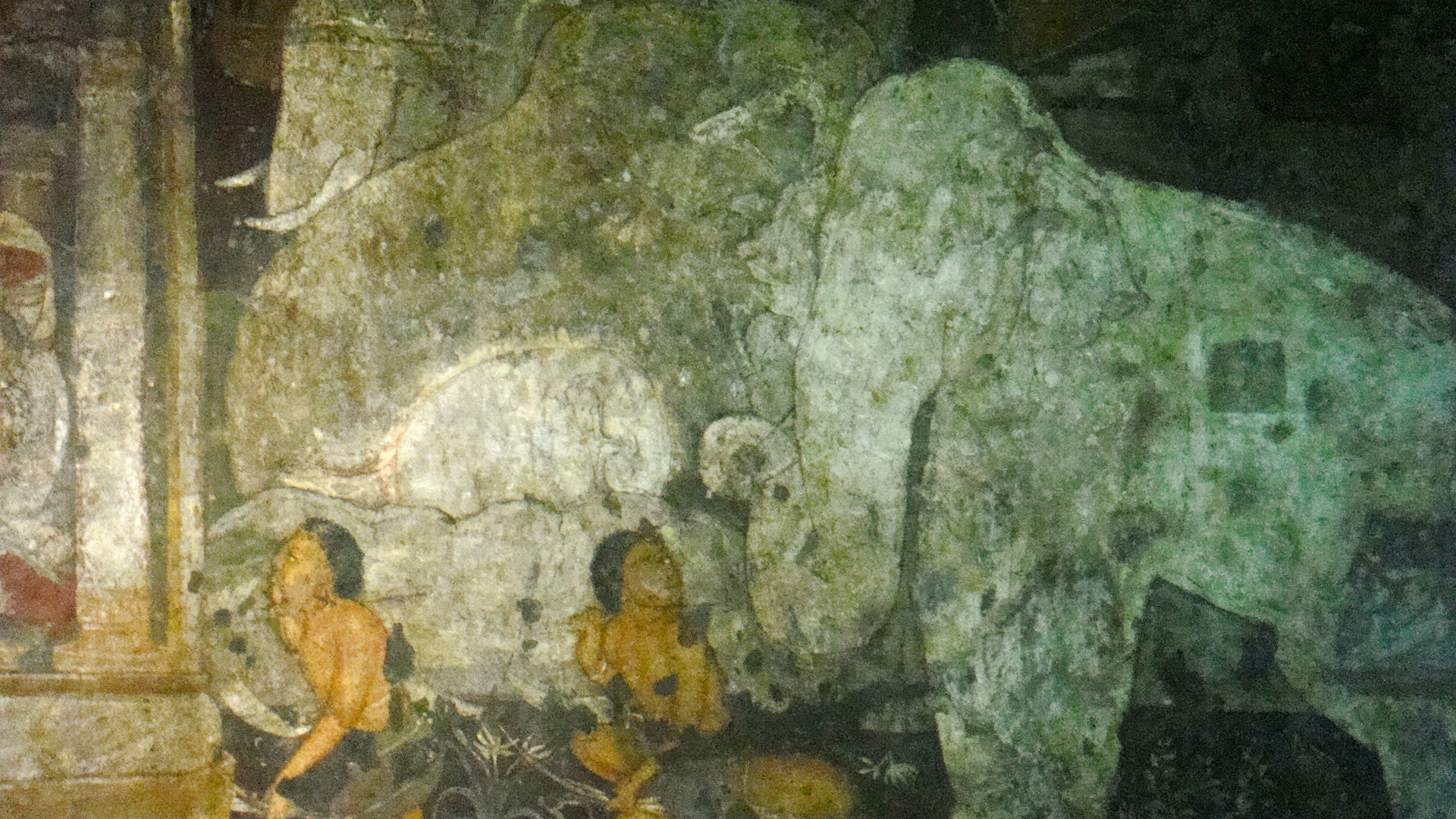


Ajanta – 10 out of 10!
The next day we went to Ellora. On the way we passed Daulatabad and it’s impressive fort. The picture shows the rows of fortifications and the virtually impregnable fortress set high on a rocky outcrop:
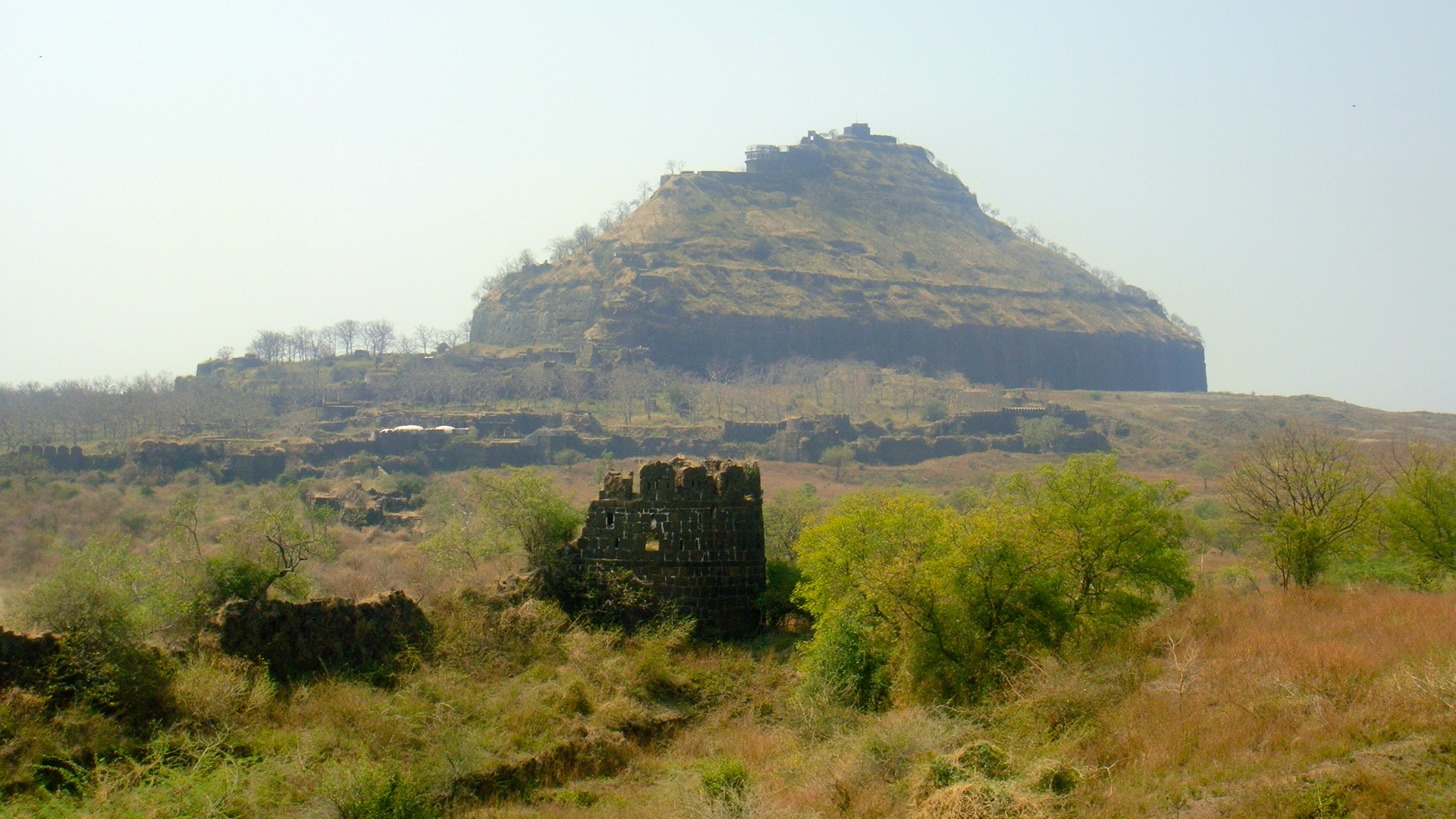
The steep vertical sides are not natural, the rock was cut away to improve the defences.
The fort was actually not impregnable and in the early 1,300’s was taken by Qutb-ud-din Mubarak Shah Khilji who was soon succeeded by Muhammad-bin-Tughluq. Up to this time the town and fort had been known as Deogiri. Muhammad-bin-Tughluq renamed the town as Daulatabad and in 1328 moved the capital from Delhi. Moving the capital proved to be hugely unpopular and was soon reversed, the only thing that stuck was the name. But Daulatabd had it’s few years of fame as the capital of India!
Ellora was very different to Ajanta. The location is not so attractive (how could it be?) and the scale is bigger. Ellora is also much more recent having been carved between the 5th and the 15th centuries AD. Ellora has thirty four caves, caves 1-12 are Buddhist caves, caves 13-29 are Hindu (Brahmanism) and caves 30-34 Jain.
The nearest cave to the entrance is cave 16, this is actually not a cave but rather a massive temple hewn from the rock. The scale of the temple is breathtaking:
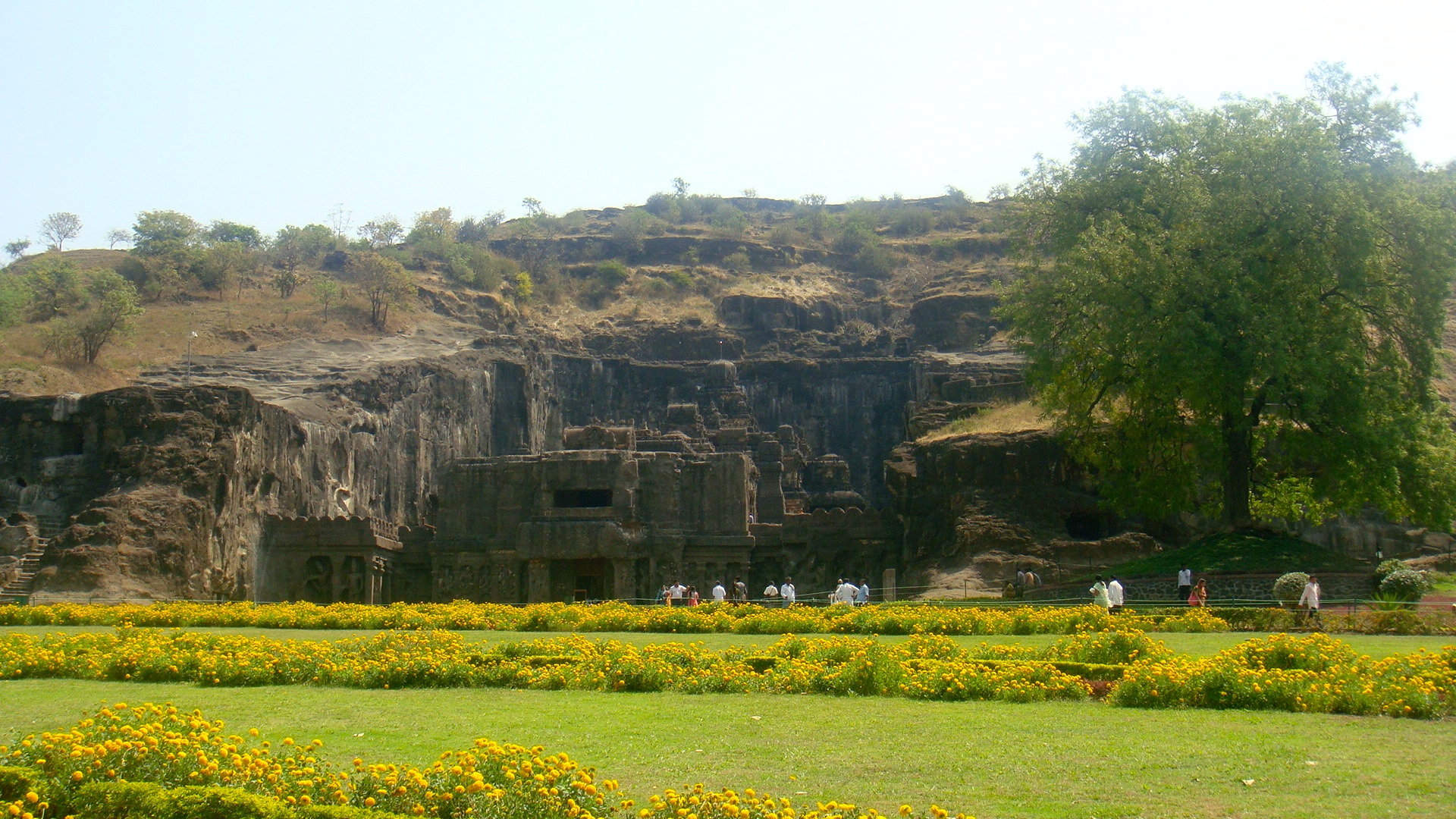
but perhaps only apparent with something to compare to, look for the person in red in the centre of the photo below:

Some caves were huge, this was dormitories:

and this a meeting room:
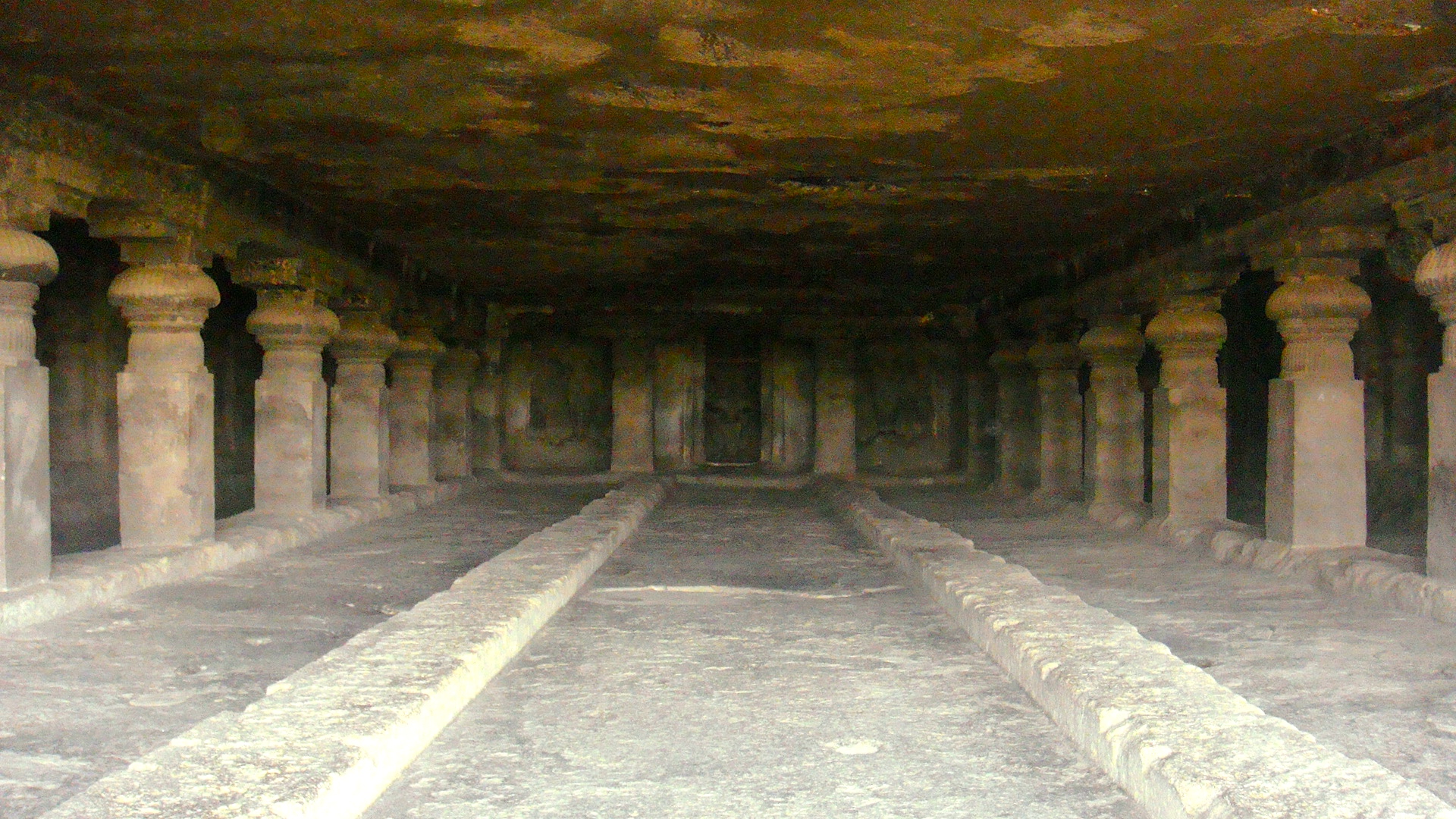
Some were small and intimate:

The Ellora caves are also famous for their art, we loved the paintings in the Jain temple (cave 32):
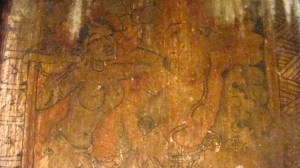

Several other caves also had wonderful paintings:
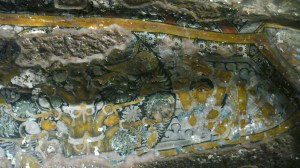
and great colours:
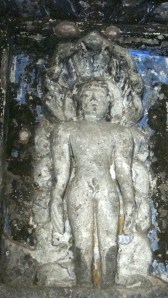
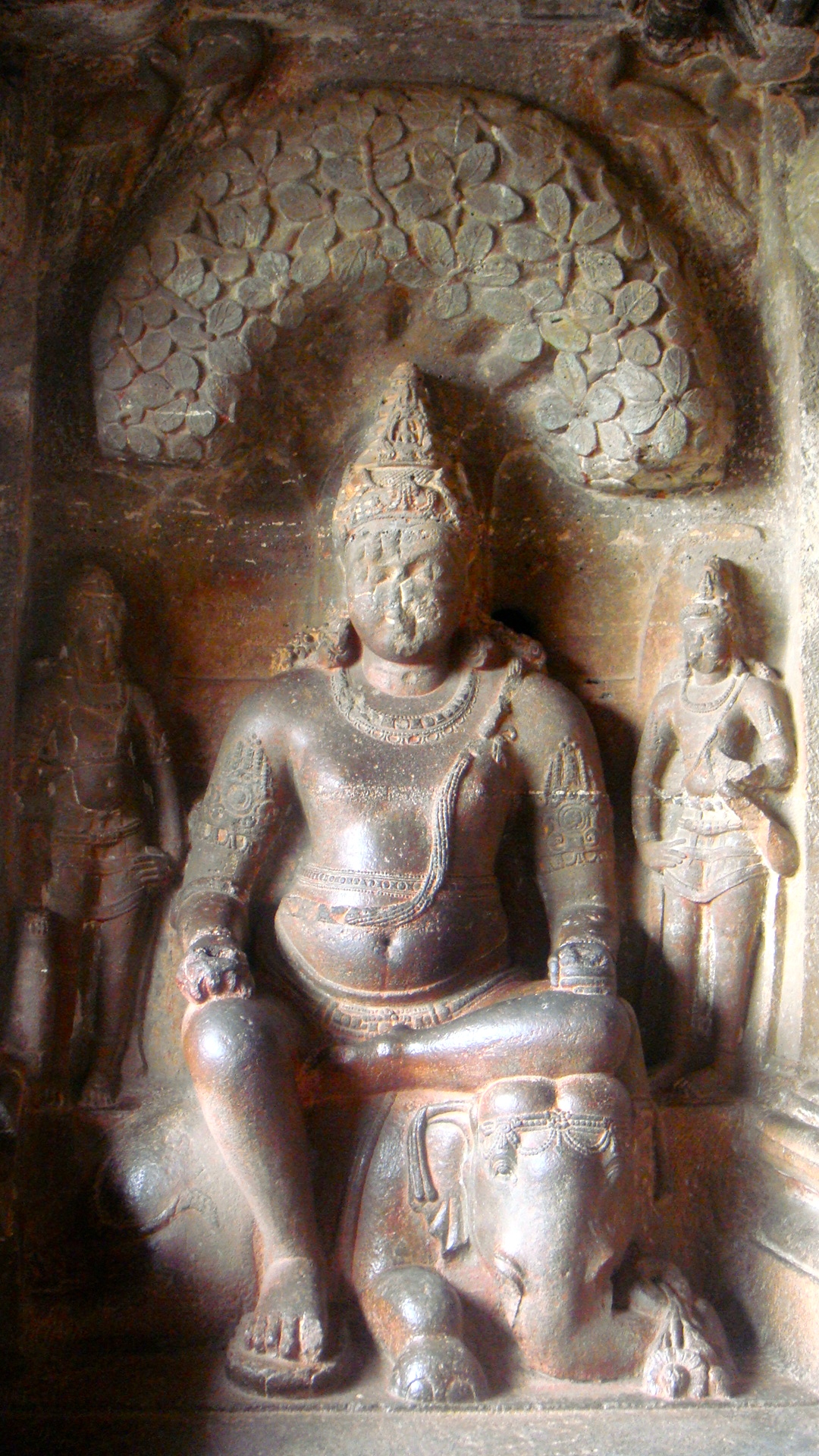
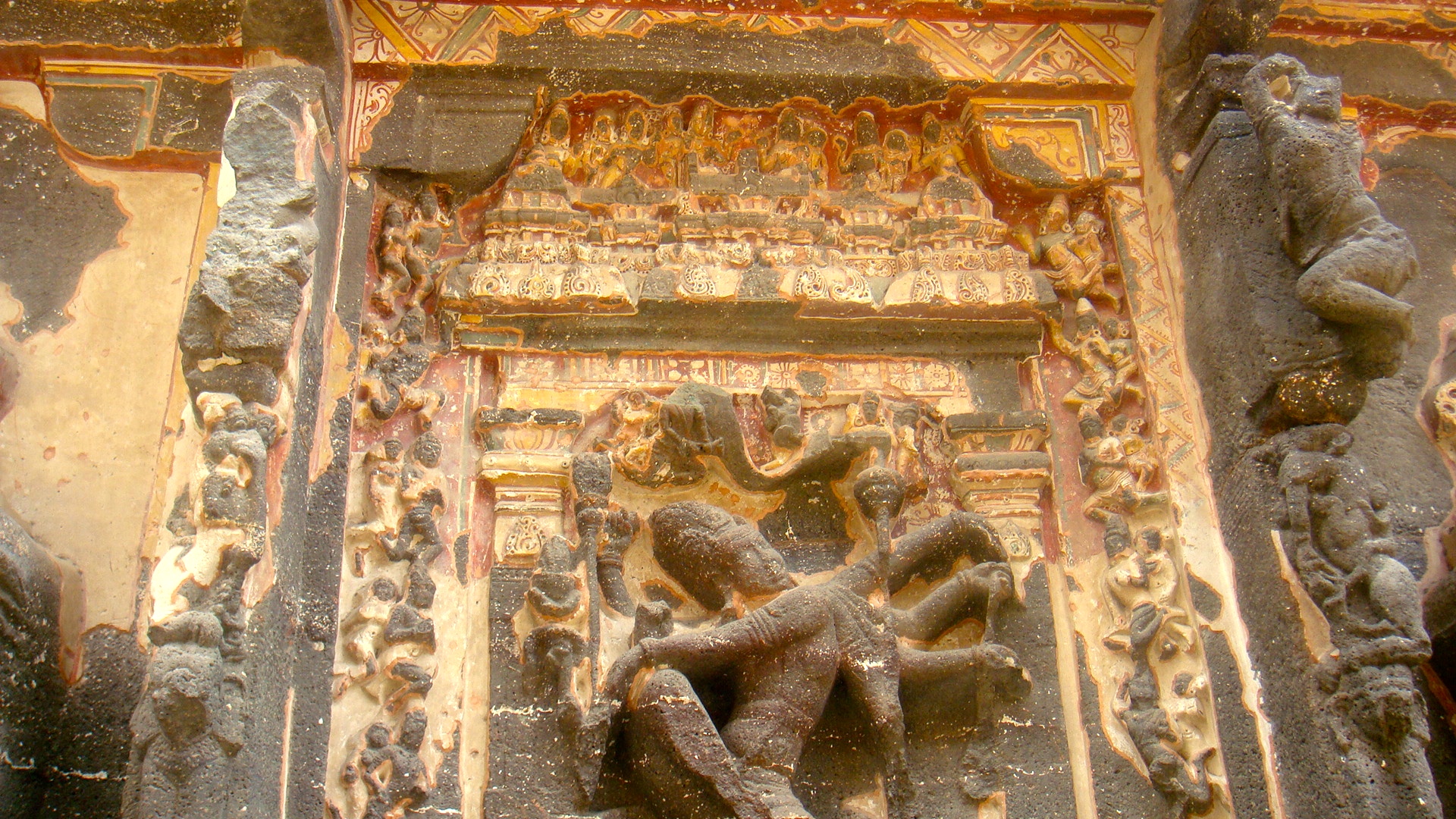
There were interesting carvings:

and well preserved sculptures:
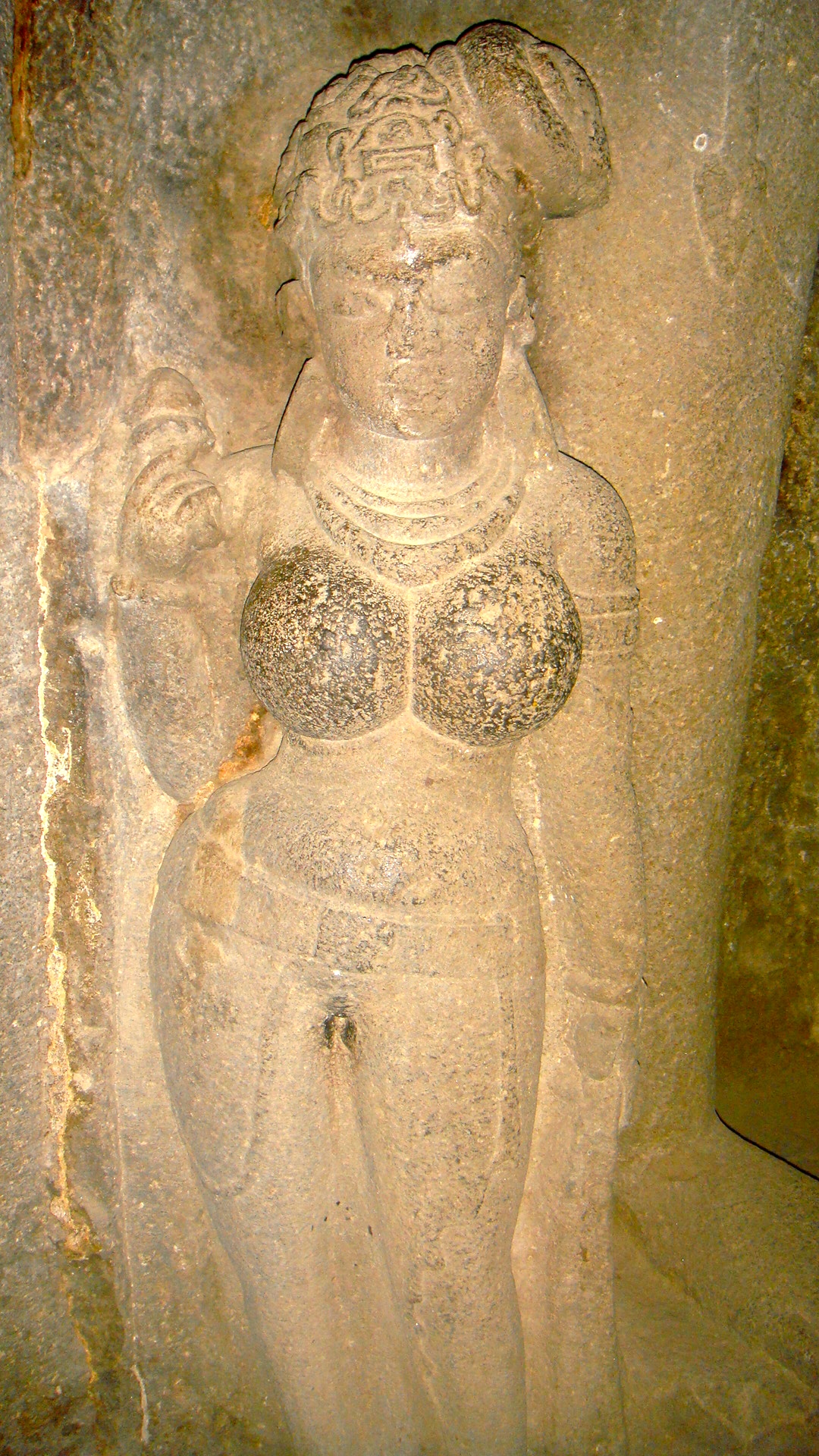



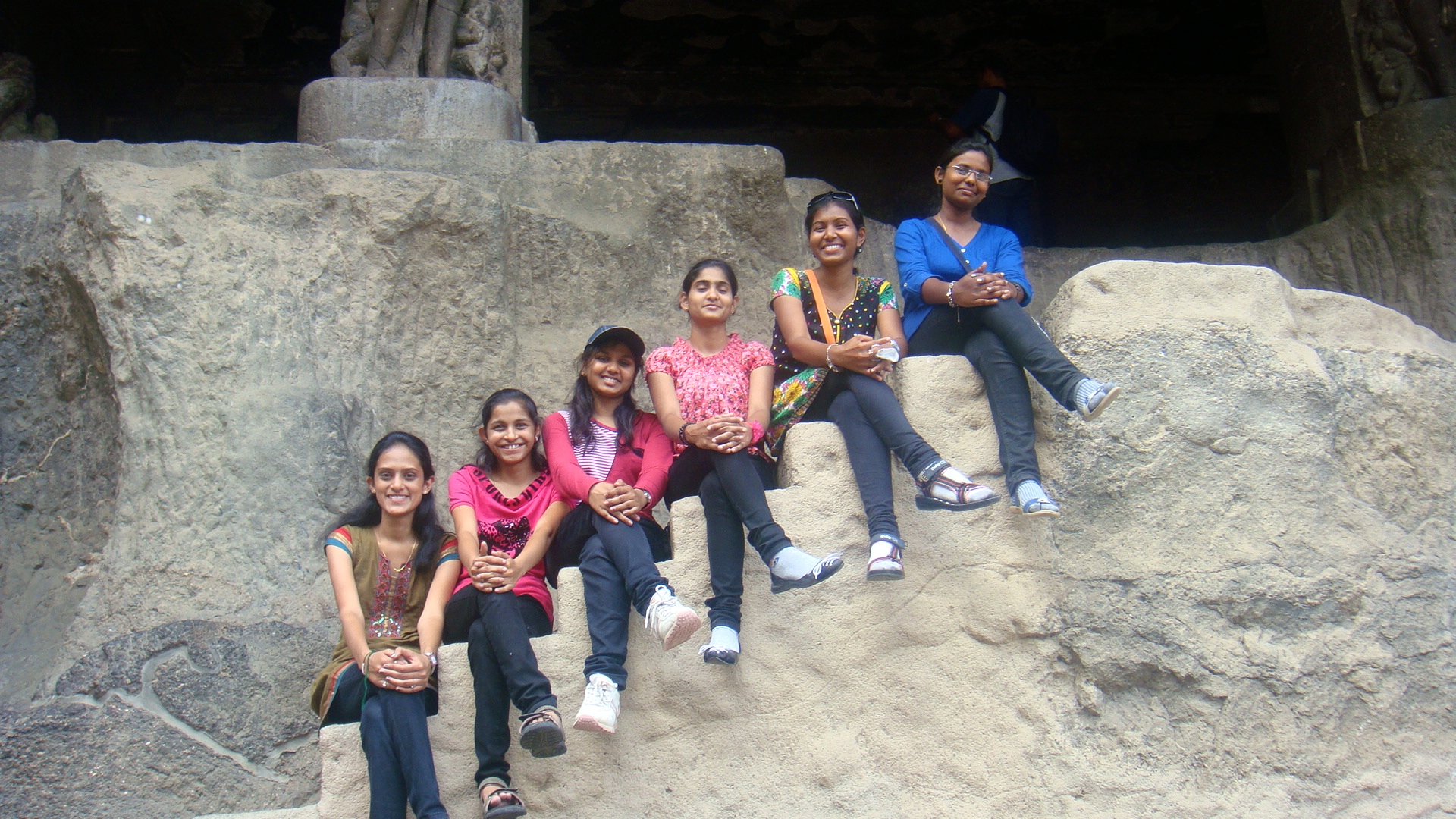
There were some very attractive visitors:
and some not so attractive residents:

We would have given Ellora 10/10 but sadly the Indian scourge is rife here. Some of my Indian friends may disagree with me (and I’d love to hear other perspectives) but in my reality India is littered with rubbish. Most people throw their rubbish away the moment it becomes rubbish regardless of where they are. The average person won’t walk ten feet to a bin to throw away a wrapper, they just drop it where they stand. We’ve even seen people stop their car on the motorway, open a door and throw out their used fast food containers. We’ve seen people unwrap new purchases and drop all the packaging on the street around their feet. We’ve seen Fathers drop sweet wrappers and then give the sweets to their children – quite a message. People here keep their houses and their own few square feet clean but are happy to turn the rest of the country into a rubbish tip. This truly is the tragedy of the commons.
Sadly most of the World heritage sites we have visited have been strewn with litter (including the Taj Mahal). Ellora was no exception:
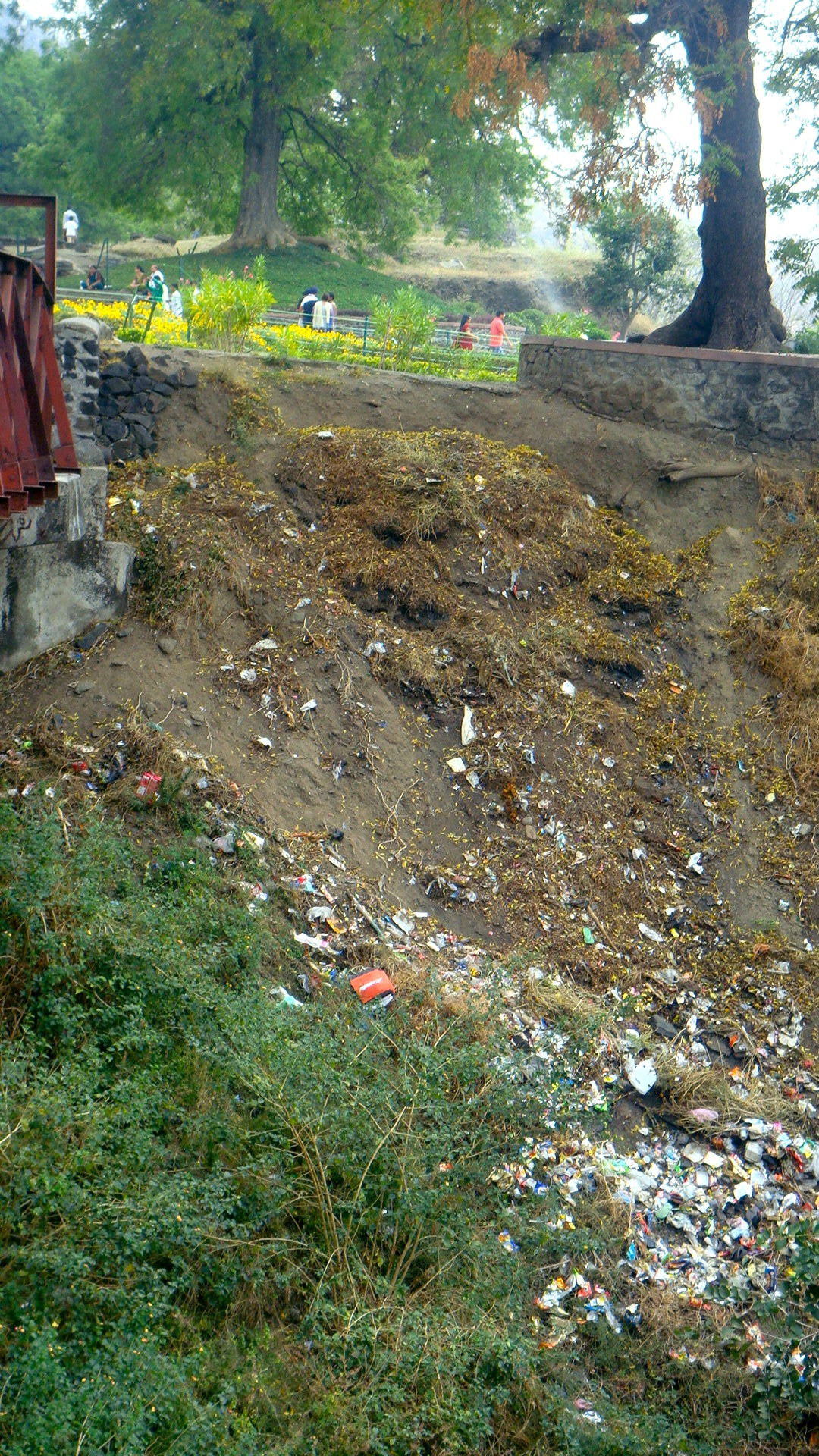
I have asked many Indians about this behaviour, generally they blame the government! The sad fact is that of all the problems India has this one truly is in the hands of the people and individually and collectively they could fix it. Unfortunately I don’t think they even recognise it as a problem. So rant over, Ellora gets a seven!
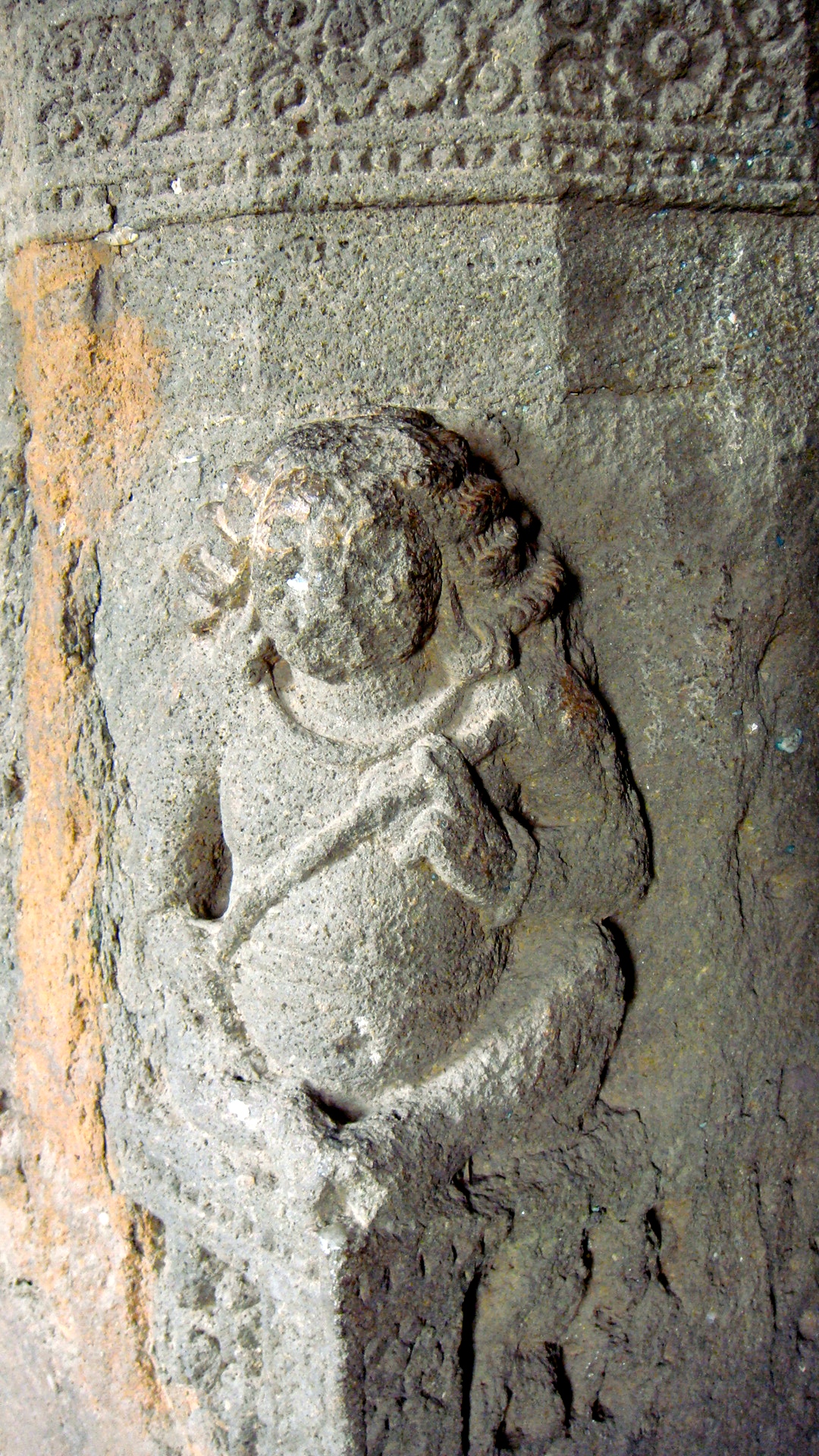
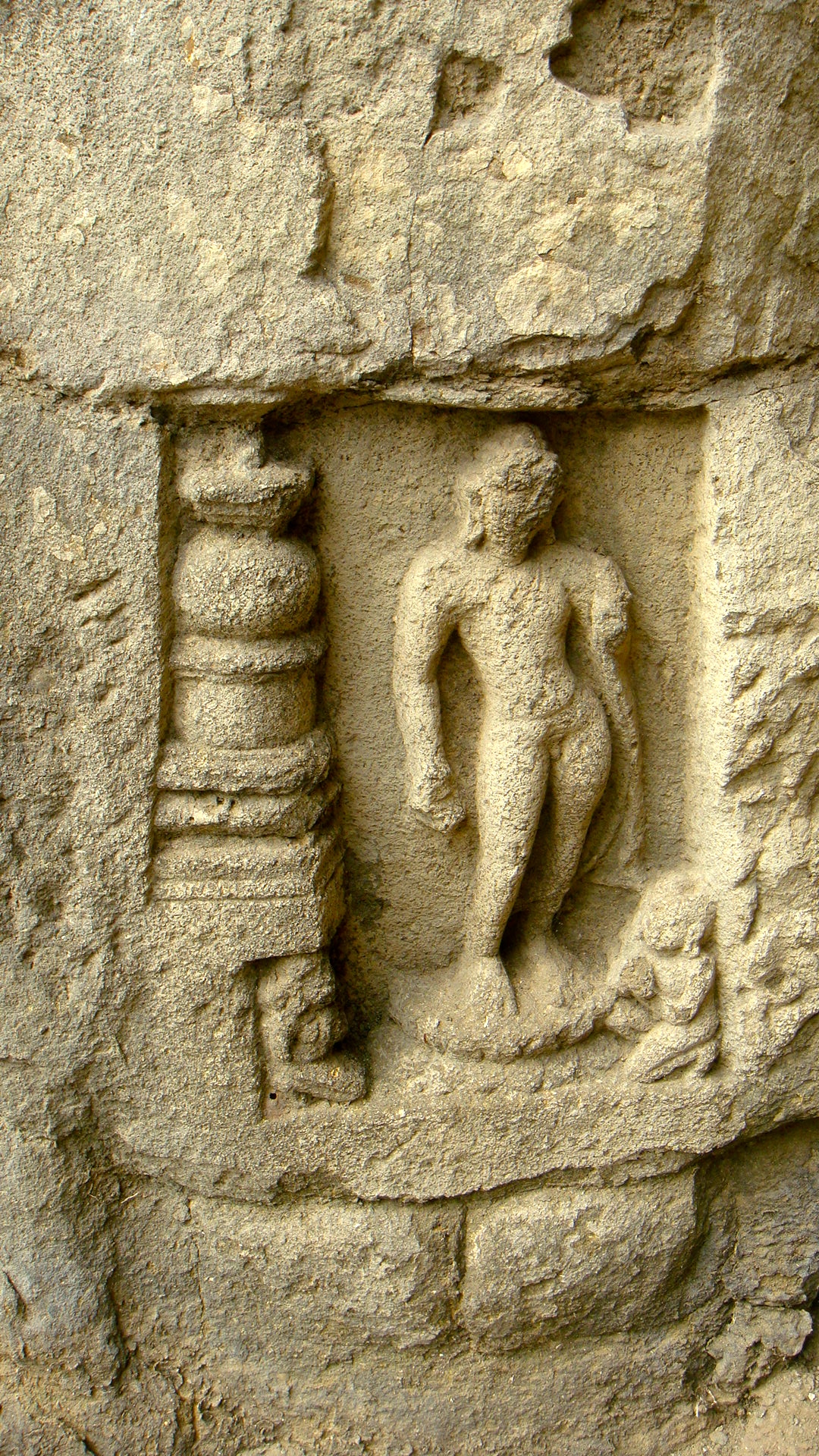
On our final day we went to the Aurangabad caves. There are twelve Buddhist caves dating from the 2nd to the 7th century AD. The caves are smaller in scale and accomplishment than those at Ajanta and Ellora but still interesting:
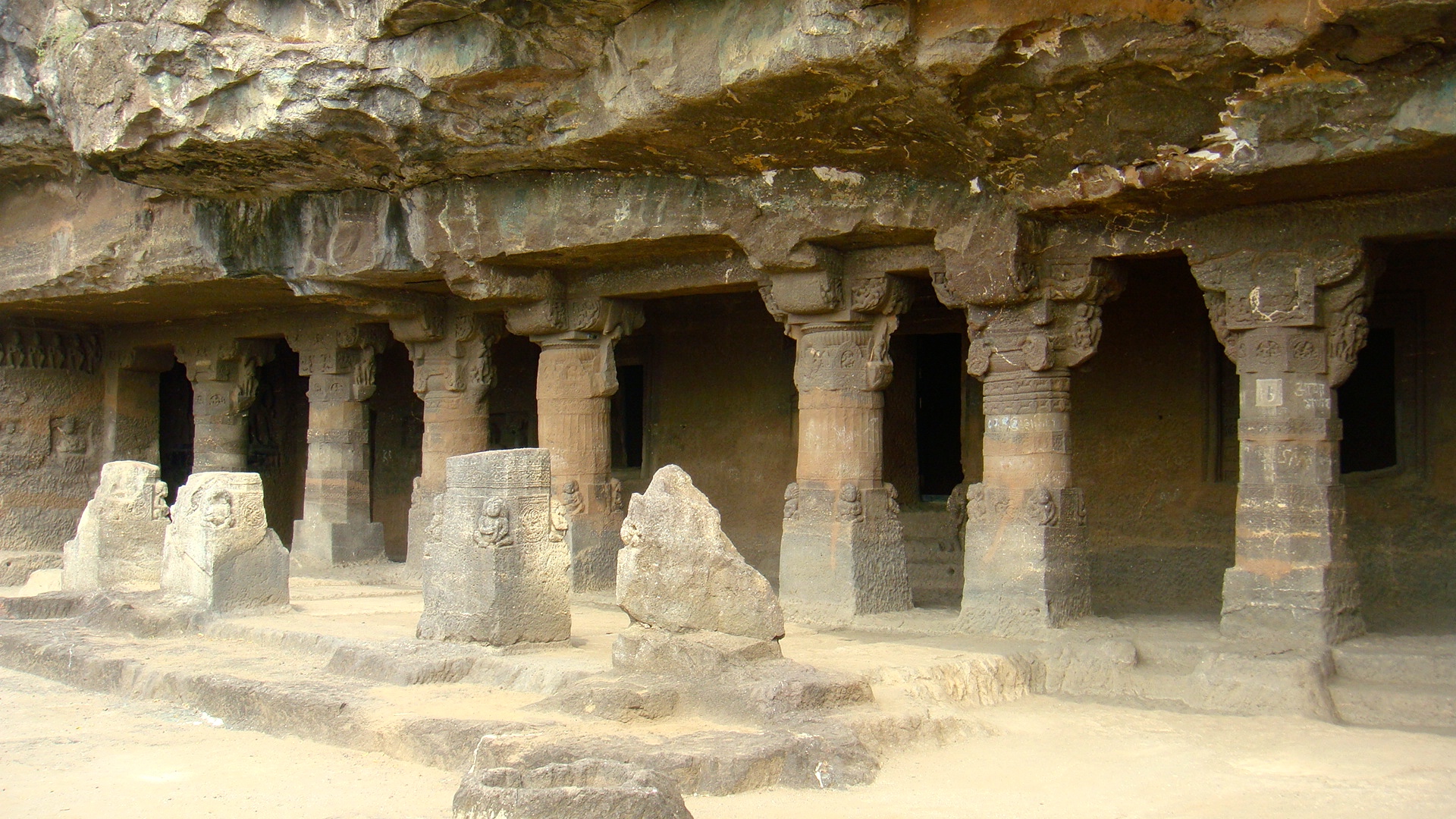 The largest cave
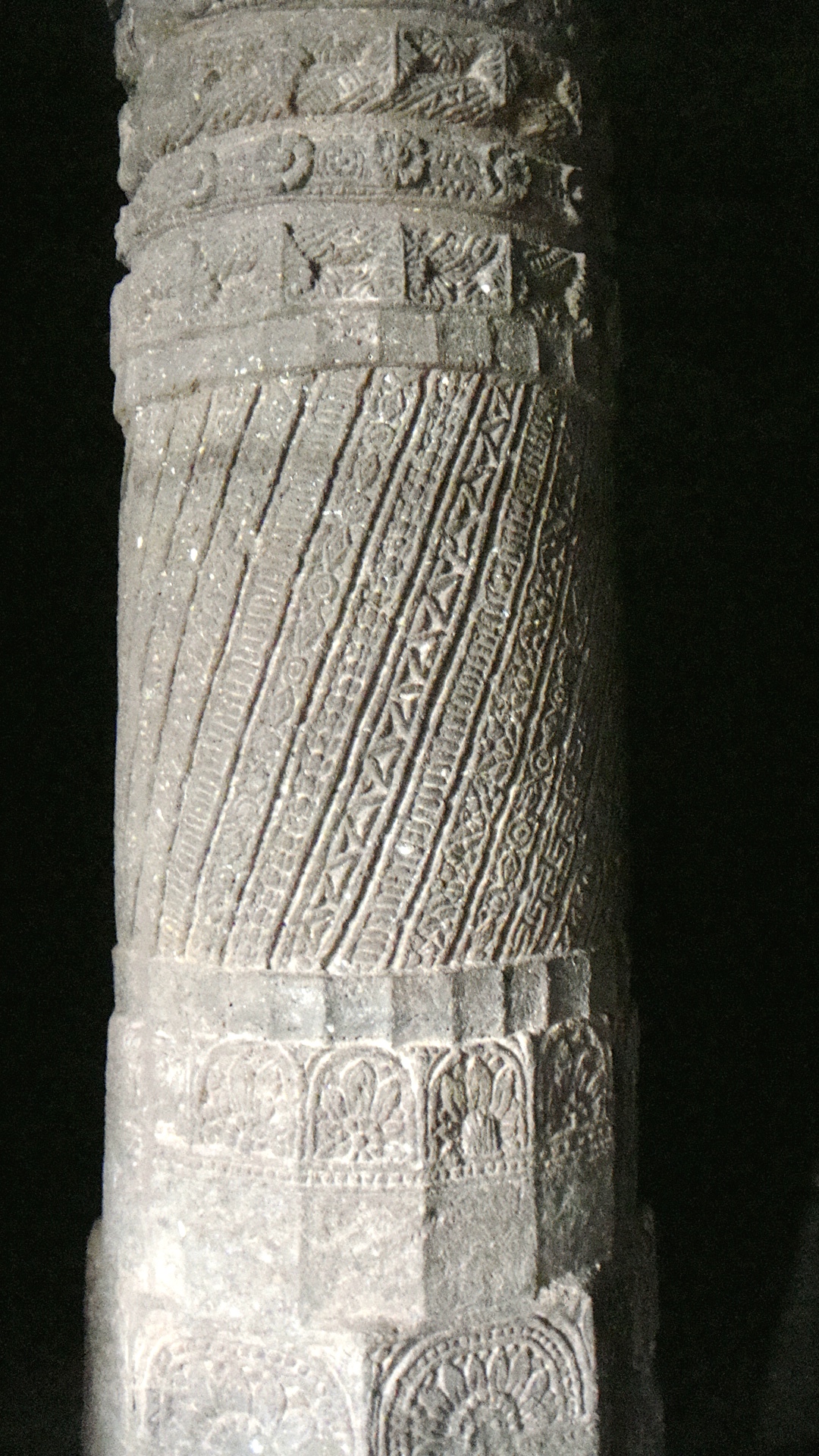 The first helical design we have seen in India
From the caves we went to the Bibi-Ka-Maqbara (“Tomb of the Lady” in Urdu), a mausoleum built between 1650-1657 by Prince Azam Shah, son of the Mughal Emperor Aurangazeb in memory of his mother, Dilras Banu Begum (posthumously known as Rabia-ud-Daurani). The mausoleum is very similar to the Taj Mahal, perhaps not surprising since the Taj Mahal is the mausoleum of the Prince’s Grandmother, Mumtaz Mahal.
 Same shot, different setting!
In a horrific piece of architectural vandalism a mosque was added around one hundred years after the mausoleum was completed. The mosque destroys the original symmetry.
The grave itself is very simple:

The mausoleum was built on a budget but despite that is very beautiful with some splendid water features:

From the mausoleum we could see the Aurangabad caves in the distance:

We spent the rest of the day lazing by the hotel pool. It was in auspicious day – I managed to beat Leishia at backgammon (a very rare event!):

So that’s that, final stop Udaipur then home to see Titch! Time for one more blog? Probably:-)
 India 2013/14