
It was a short drive from Chitradurga to Hampi but still long enough to see yet more road accidents. This accident was probably the most horrific we have seen, it was a truck whose load of steel rods had moved forward and forced the cab down and into the road:

This a truck which had simply run off the road:
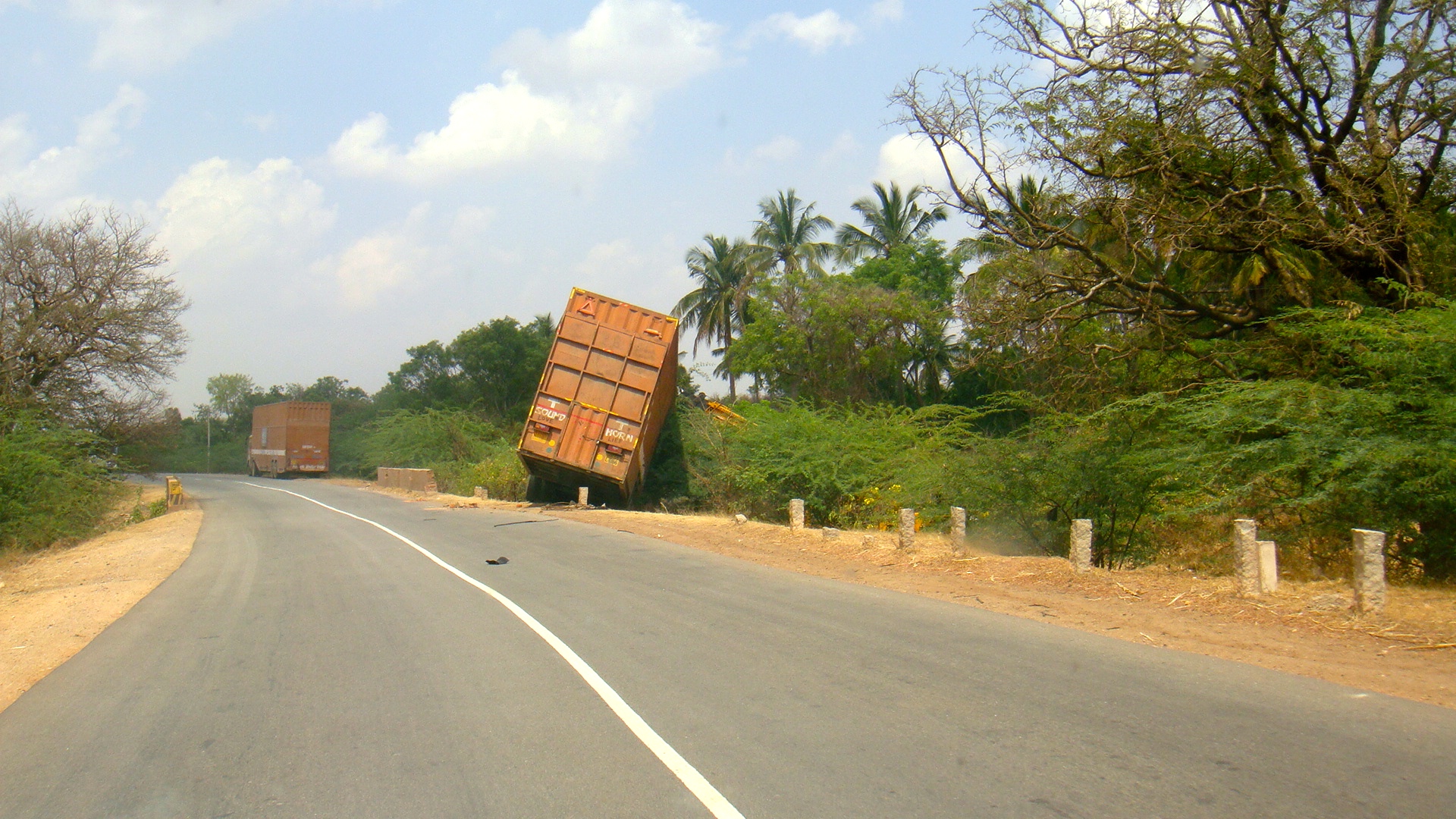
There are any number of reasons for these accidents. Overloading is an obvious issue, vehicle condition is another, tyres especially:
 Not that sort of tyres I prefer to trust my life to!
Although we have come to expect them we are still surprised by the number of truck accidents we see, “someone should do something”.
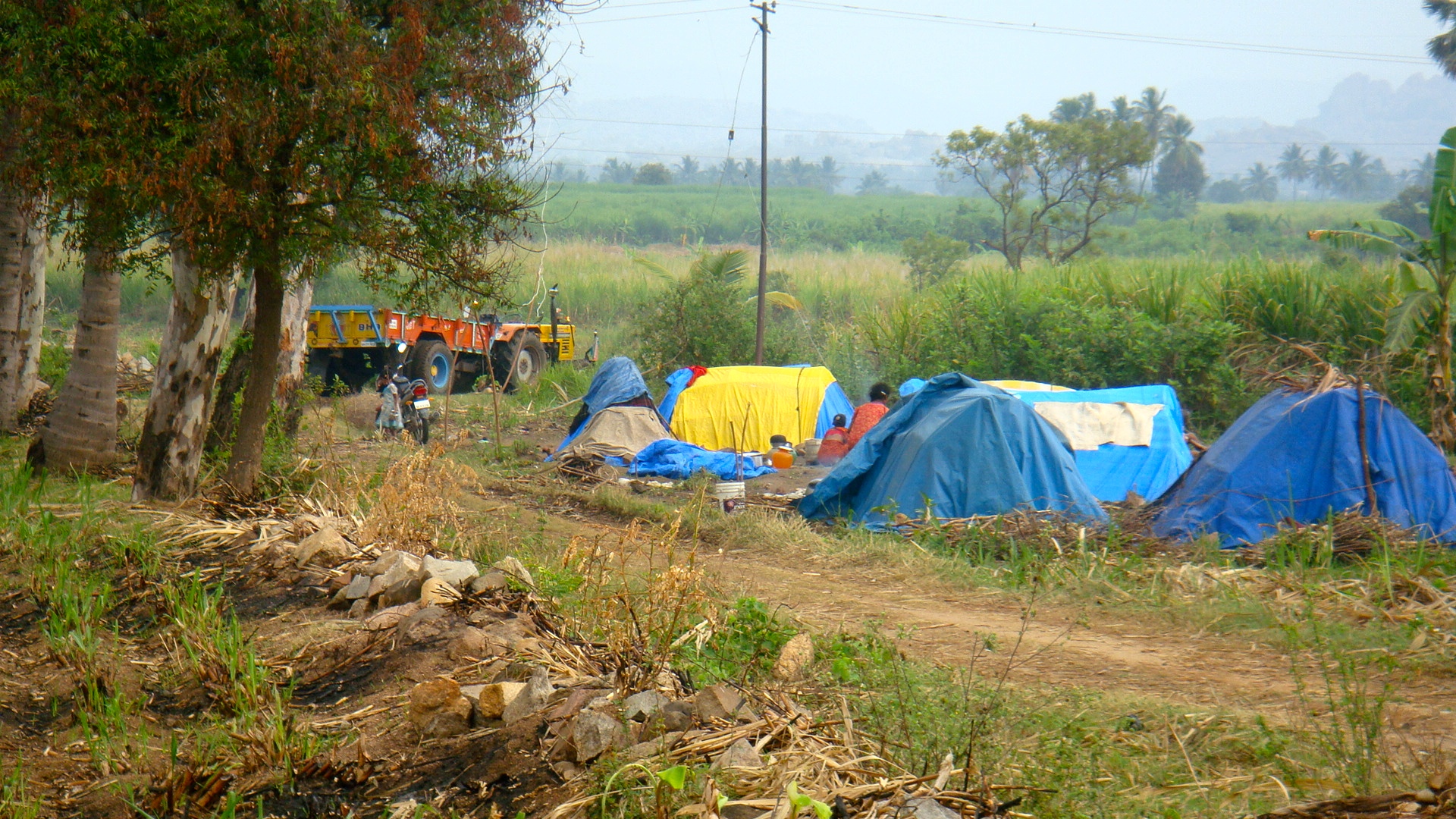
Travelling back north we have seen a lot of migrant workers camping in the fields. Most of them have travelled west into Karnataka from Andhra Pradesh for the sugar cane harvesting season, here is a typical camp:
We also saw another troupe of dancing ladies:

We reached Hampi early enough to organise a tuk-tuk for the next day and were out bright and early to look around.
Hampi is a UNESCO World Heritage Site and was, from 1343 to 1565, the capital of the Vijayanagara Empire . The Empire rose to prominence as efforts to ward off Muslim attacks from the North started to succeed. The Empire became established and gained influence but suffered a massive defeat in 1565 at the Battle of Talikota when 140,000 Muslim troops switched sides and attacked their previous comrades from the rear.
By 1646 the Empire was an Empire no more.
Fortunately much of the capital has survived. There are over five hundred structures of interest in Hampi so seeing them all was never going to happen. Instead we decided to target the most spectacular sites the first of which was the Vijaya Vittala temple, we noticed a familiar carving at the entrance:
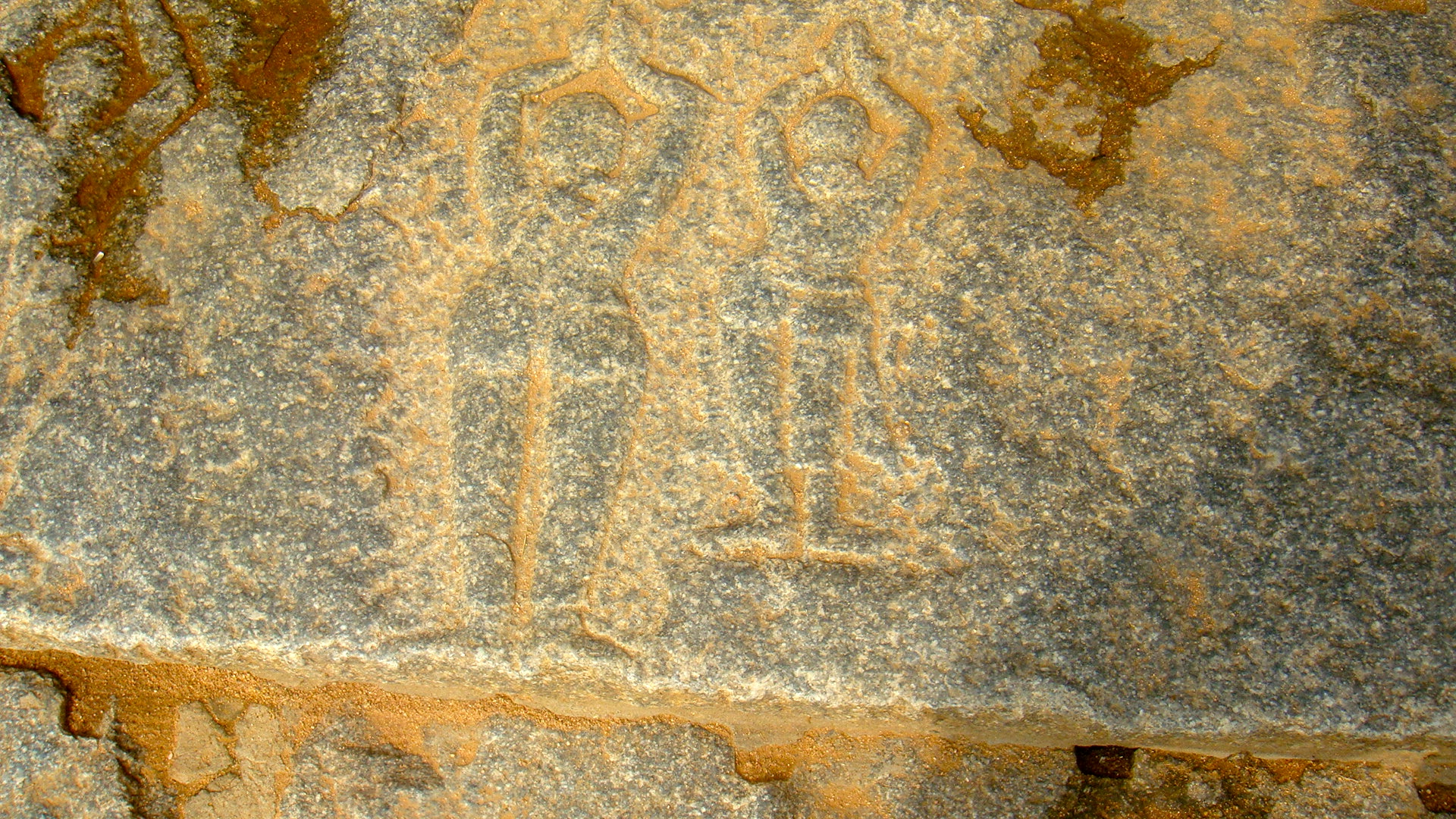 Ancient form of “Namaste”
Inside the temple complex is the Maha-Mandapa – the musical palace:
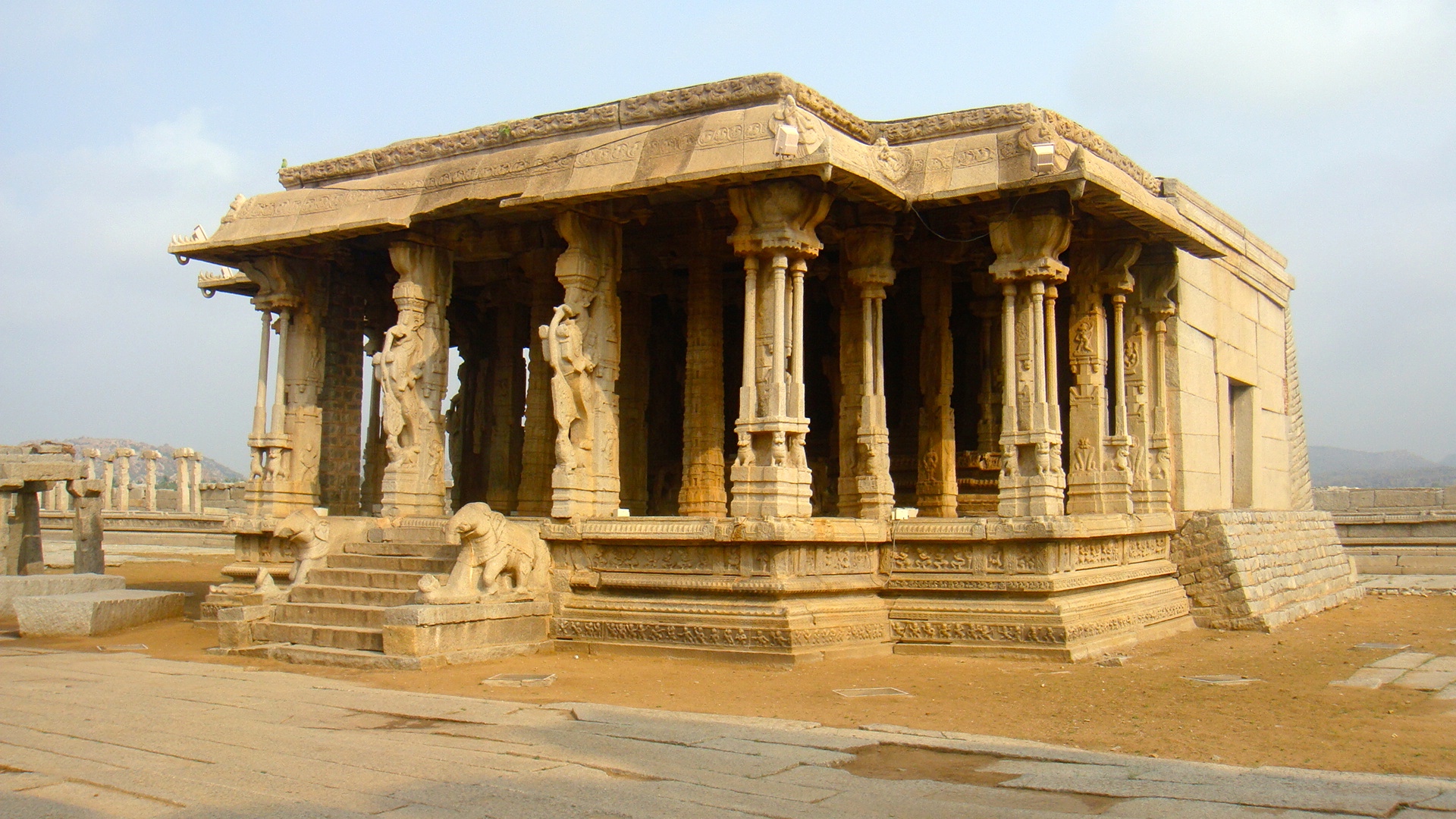
The most special feature of this palace is the many groups of stone pillars which when tapped emit perfect notes:

Close to the musical palace is the fabulous stone chariot:

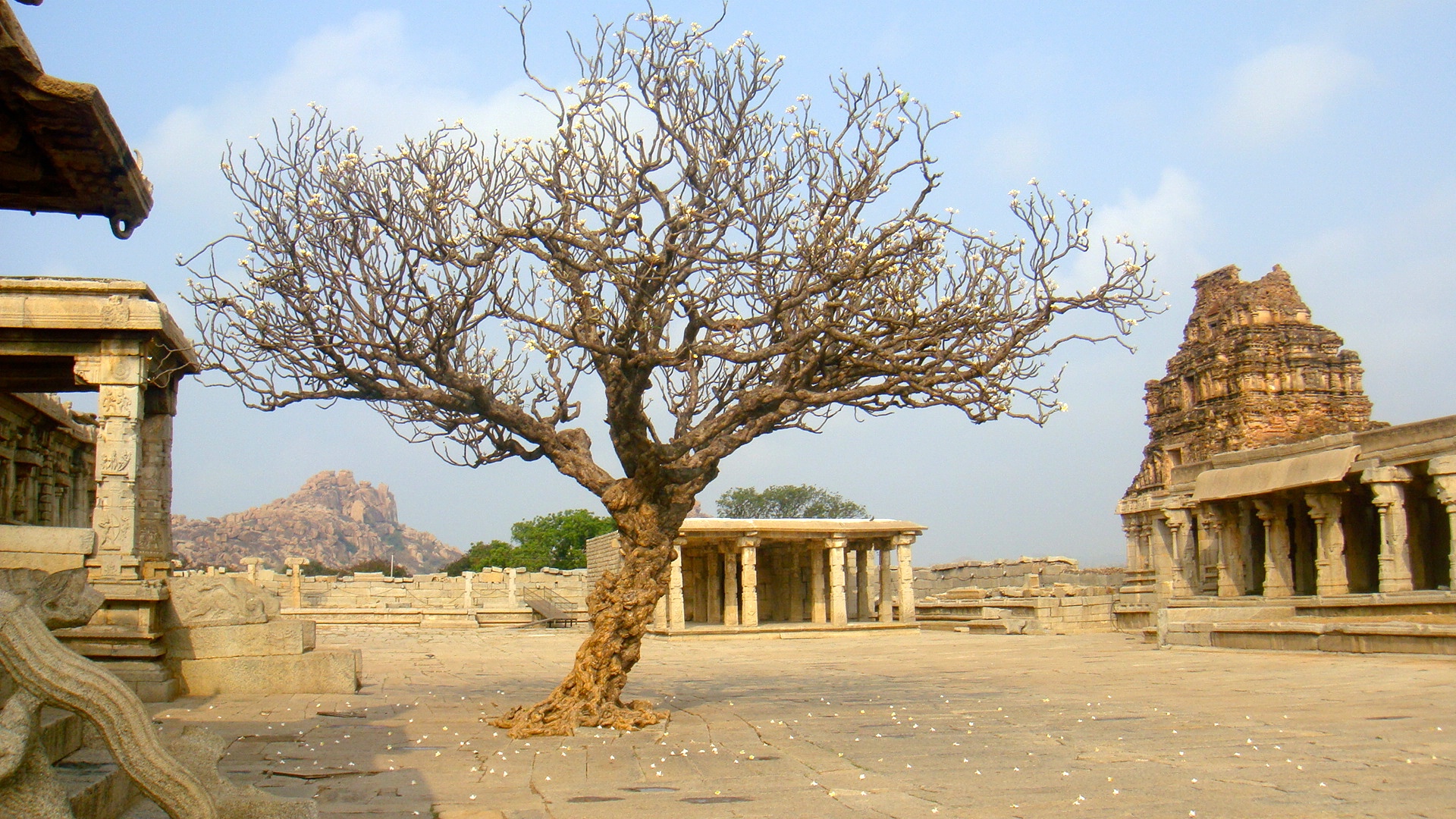
and in the courtyard this beautiful tree:
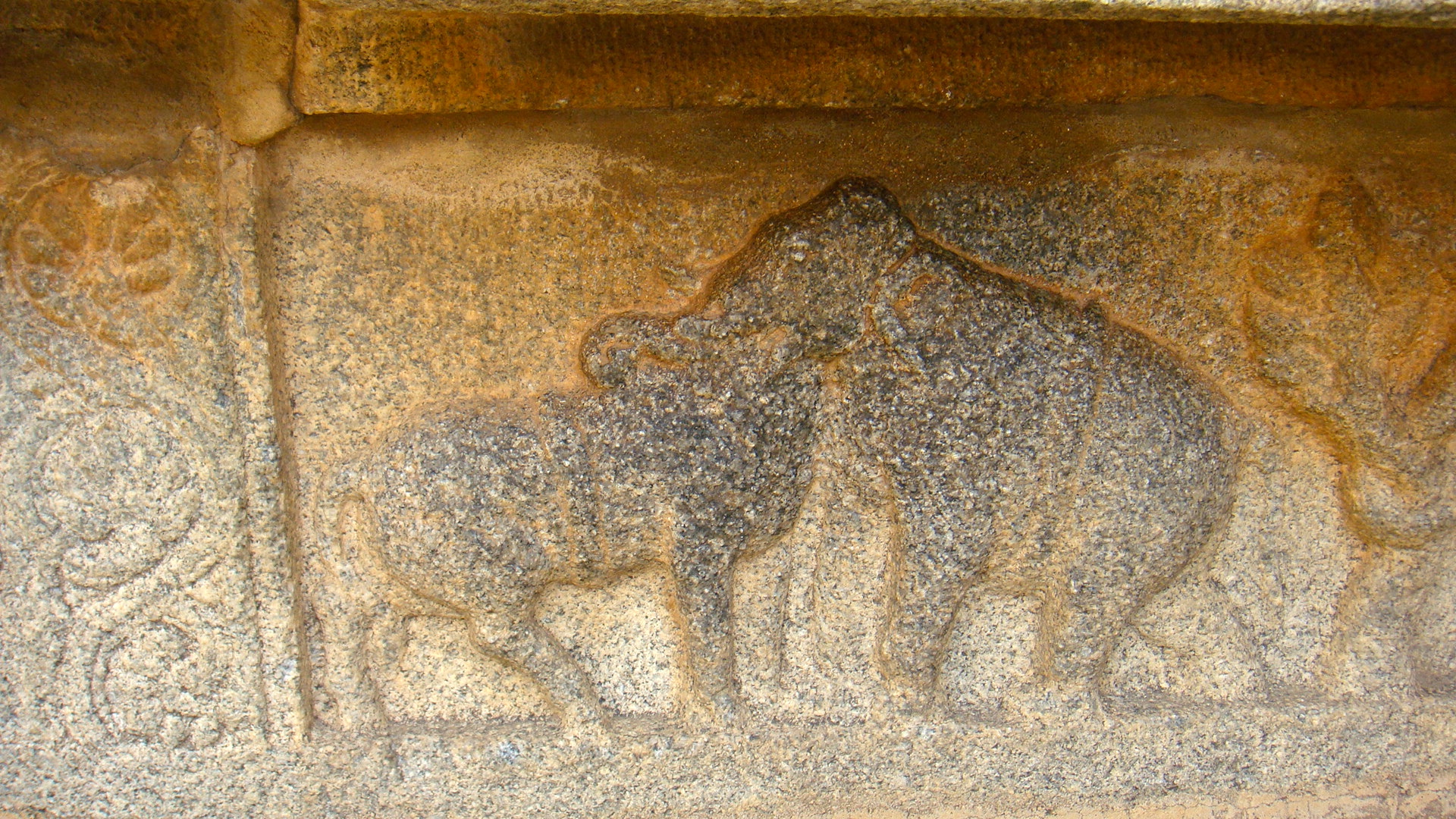
There were some interesting sculptures. Covering the torso and legs of the right hand animal below reveals an ox, covering the torso and legs of the left hand animal reveals an elephant. The two share a head:
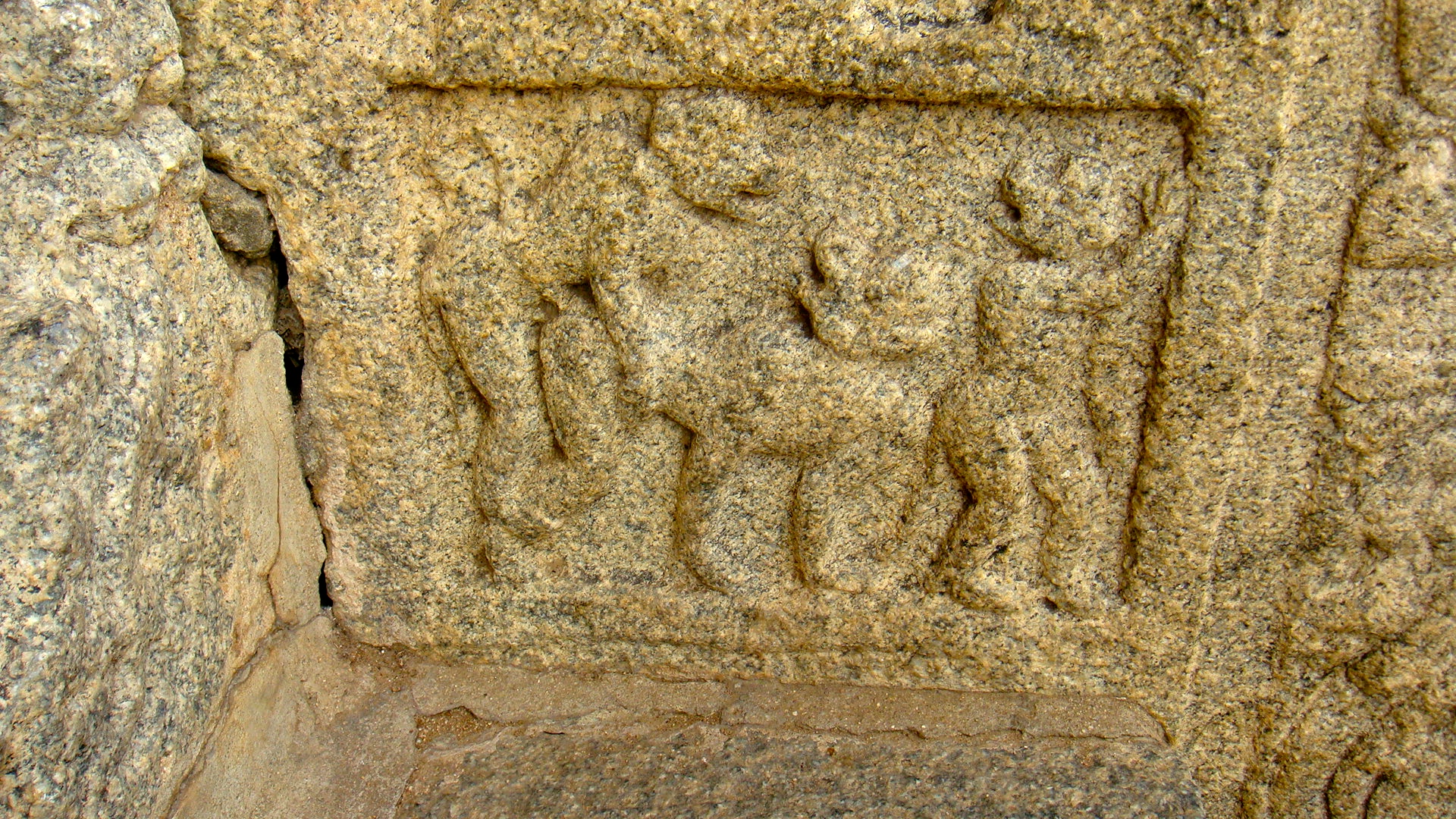
This reminded us of Khajuraho:
 Monkey business!
Later in the Virupaksha temple we noticed a second Khajuraho-like carving:

We also spotted this elephant being attacked and seemingly taking some revenge:

Some of the sculptures were in surprisingly good condition:

Hampi lies just south of the Thungabadra river. In it’s heyday there was an elevated stone bridge across the river, many of the pillars survive in place so we took a coracle ride to see them close up. This is an island in mid-stream where the pillars survive:

Leishia in our coracle:

The pillars from the coracle, the ones on the right stood in the river and have been pushed over by five hundred years of flowing water:

There are two huge bazaars in Hampi, this shot was looking down through what would have been a row of merchants shops:

 The same bazaar from a distance.
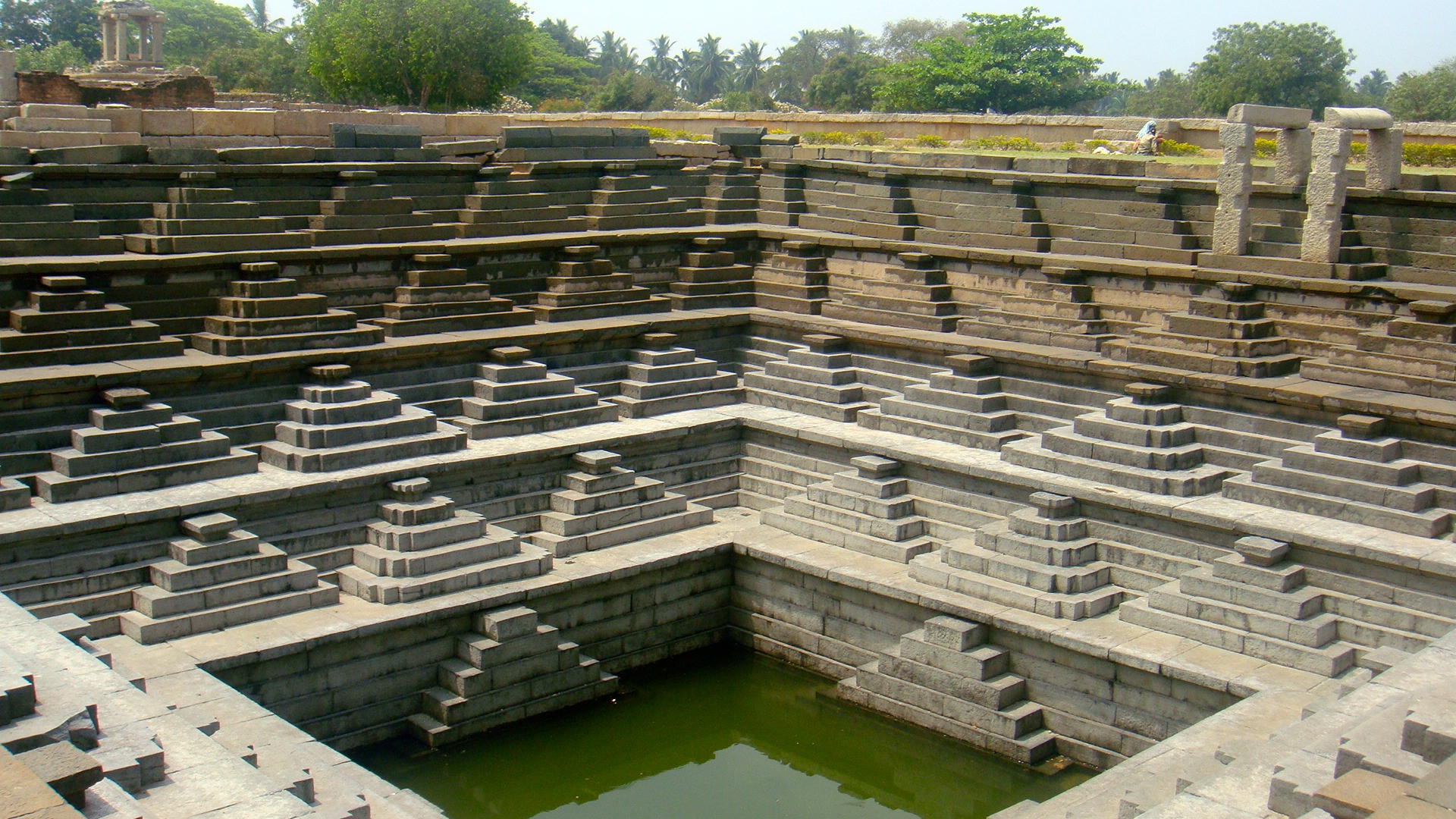
There is also a wonderful step well which was rediscovered and excavated in the eighties:
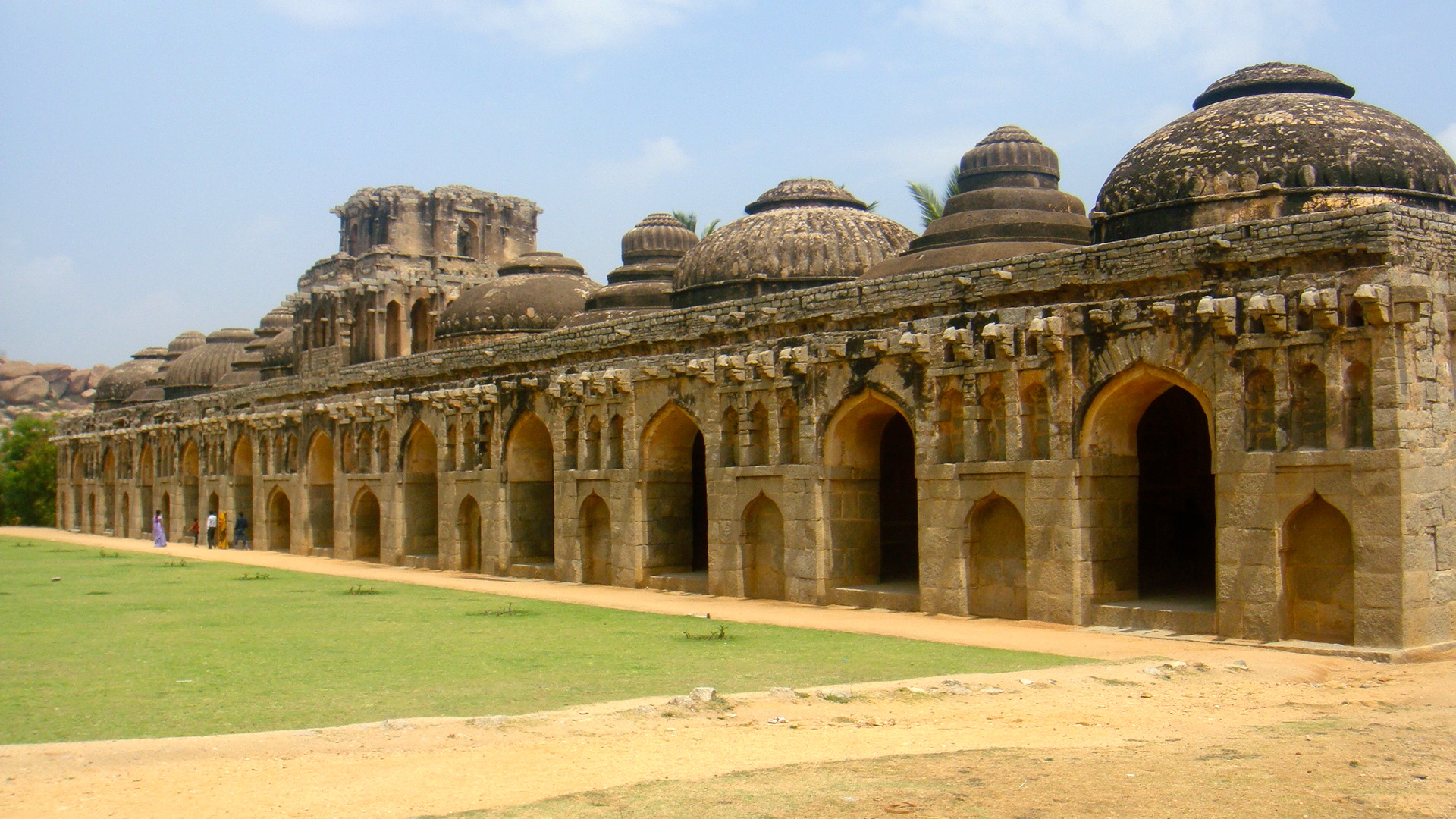
And this fantastic elephant stables with room for eleven elephants:
This was one of two solid stone entrance doors which were opened and closed by elephants:
Just before we stopped for the day we came across this :
 Two cobras!
It would be easy to spend several days at Hampi. By four pm we were exhausted – we have a new name for it – “Unescoed”.
 India 2013/14
good pictures from Hampi
Thank you.